Serving Gauteng Province+27 69 747 3836info@extractorfanexperts.co.za
Office, Education, Retail And Professional-Service Precincts

Commercial Kitchen Extraction Lynnwood

Commercial kitchen extraction Lynnwood for restaurants, canteens and commercial premises. Canopies, ducting, fans, repairs, maintenance and airflow solutions.

Fast quote request

Tell us what you need. We’ll take it from there.

Send your Gauteng location and service requirement. For the fastest response, WhatsApp photos of the fan, canopy, ducting or fault after submitting.

Chat on WhatsApp
Your request goes directly to our booking team. You can also continue on WhatsApp for photos and faster clarification.
Commercial kitchen extraction work in Lynnwood Gauteng
Local commercial extraction

Canopies, fans, ducting, repairs and maintenance

Lynnwood is a Pretoria East office and retail-service node supported by educational institutions, professional firms, medical uses and convenience centres. Food-service demand includes cafés, restaurants, office kitchens, institutional catering and hospitality businesses along the Lynnwood Road corridor.

We work on complete commercial extraction systems, including canopies, grease filters, ducting, centrifugal and roof fans, motors, controls and replacement-air considerations.

Commercial extraction in Lynnwood

Lynnwood is a Pretoria East office and retail-service node supported by educational institutions, professional firms, medical uses and convenience centres. Food-service demand includes cafés, restaurants, office kitchens, institutional catering and hospitality businesses along the Lynnwood Road corridor.

Many Lynnwood premises sit in lower-rise office parks or neighbourhood centres. That can create practical roof access, but nearby offices and residential properties increase the importance of low-noise operation, discreet discharge placement and properly sealed ductwork.

For businesses comparing contractors for commercial kitchen extraction Lynnwood, the useful distinction is whether the company is considering the whole airflow system or only selling a fan. We work from capture at the canopy through to discharge and replacement air so the proposed work addresses the actual operating problem.

Planning a new installation or upgrade

For a new installation, useful information includes the cooking equipment schedule, proposed canopy position, roof or wall access, ceiling voids, building management requirements and available electrical supply. Early coordination is valuable because extraction routes compete with structure, air-conditioning, plumbing and other services.

Upgrades require a different survey. We identify what already exists, whether the canopy and duct sizes remain suitable, what condition the fan is in and whether previous alterations have changed the cooking load. Reusing serviceable components can be practical, but only when they still fit the new duty and can be cleaned or maintained properly.

A clear scope should separate canopy work, ducting, fan or motor work, controls, roof or wall penetrations and any associated builders’ work. That helps the customer understand which parts of the system are being changed and which remain existing.

Local service and response across Gauteng

Our Gauteng service model is built around commercial clients who need clear communication and practical scheduling. For fault calls, sending photos of the canopy, fan, motor nameplate, controls and visible ductwork can help us understand the likely scope before arrival, although on-site diagnosis is still necessary for many airflow problems.

We work across Johannesburg, Ekurhuleni, Tshwane, the West Rand and the Vaal, linking local area pages to the most relevant service pages rather than treating each suburb as an isolated website. This helps customers move from a location search into the exact installation, repair, ducting, canopy or ventilation service they need.

For urgent operational problems, the best first message includes the location, business type, whether the fan runs, what changed, when the fault started and whether smoke or heat is escaping into occupied areas. That gives the technician a more useful starting point than a generic request for “extractor repair.”

Commercial kitchen extraction problems seen in Lynnwood

Weak extraction often shows up as smoke rolling from the canopy edge, lingering odour, high kitchen temperatures or grease settling on nearby surfaces. Mechanical faults may present as rattling, humming, vibration, intermittent running or repeated electrical trips.

In Lynnwood, we also consider property-specific factors such as shared roofs, long service routes, industrial dust, sealed façades or close neighbouring premises. Those conditions can amplify a small design weakness until the kitchen becomes uncomfortable or difficult to operate.

A proper fault investigation checks the complete path: canopy, filters, duct, fan, discharge and replacement air. That produces a more reliable diagnosis than changing the most visible component first.

Why complete-system diagnosis matters

A commercial kitchen extraction system is a chain, not a single appliance. The canopy has to capture the plume, filters have to intercept grease, the duct has to move air without excessive resistance, the fan has to overcome the system pressure, and replacement air has to enter the building in a controlled way. If any one of those parts is wrong, the kitchen may remain smoky or hot even after a new fan is installed.

We therefore assess the duty before recommending equipment. Cooking load, canopy dimensions, duct length, bend count, vertical rise, discharge position, operating hours and building pressure all affect performance. This avoids the common mistake of selecting a fan from diameter alone and discovering later that the installed system cannot maintain useful capture at the hood.

Existing systems also need a different approach from new fit-outs. A system that once worked but gradually weakened often points to contamination, wear, loose belts, motor deterioration or airflow restriction. A system that has never captured properly may have a more fundamental design or make-up-air problem. Separating those two situations saves unnecessary replacement work.

Canopies, capture and the cooking line

The canopy is where successful extraction starts. It should cover the heat and contaminant plume created by the cooking equipment and give the air a clear path into the filters. A canopy that is too small, mounted too high or poorly positioned can allow smoke and grease to spill into the kitchen before the fan has a chance to remove it.

Different cooking processes create different loads. Light reheating is not equivalent to chargrilling, frying or high-output wok cooking. We look at the actual equipment beneath the hood, not only the kitchen floor area. Changes to the cooking line can therefore justify reassessing an existing canopy and fan even when the original system was satisfactory.

Filter condition also affects capture. Grease-loaded filters increase resistance and can distort airflow across the canopy. Maintenance access should be practical enough that filters can be removed and cleaned without dismantling surrounding equipment or creating unsafe working conditions.

Ducting, resistance and discharge

Ductwork determines how much of the fan’s available pressure is spent simply moving air to the discharge point. Long routes, abrupt transitions, unnecessary bends, reduced sections and contaminated internal surfaces all increase resistance. The result can be weak capture even when the fan motor sounds healthy.

Good routing aims to keep the path as direct as the building allows while preserving access for inspection and cleaning. Horizontal grease duct sections should not become forgotten spaces above ceilings. Where a route passes through difficult areas, access strategy should be considered before the kitchen opens rather than after the first maintenance problem appears.

Discharge position matters locally as well. Air should be released where heat, grease and odour are less likely to re-enter the building or affect neighbours, customers and staff. Roof discharge may be suitable in many properties, while others require a carefully chosen wall or high-level termination depending on the site.

Operating conditions we commonly plan around

Commercial kitchens in Lynnwood can operate under very different patterns. café and restaurant kitchens, office-building food areas and education-linked catering may all need extraction, but their peak loads, maintenance windows and tolerance for downtime are not the same. We plan the system around actual operating hours, cooking duty and access rather than assuming every kitchen behaves like a restaurant.

For high-volume sites, reliability and serviceability are central. A fan that is technically capable but impossible to reach safely becomes expensive to maintain. Access to filters, fan housings, belts, motors and key duct sections should therefore be part of the installation decision.

Where kitchens sit inside larger buildings, coordination with landlords, facilities teams or production management may be required before shutdowns, roof access or penetrations are approved.

Fans, motors and controls

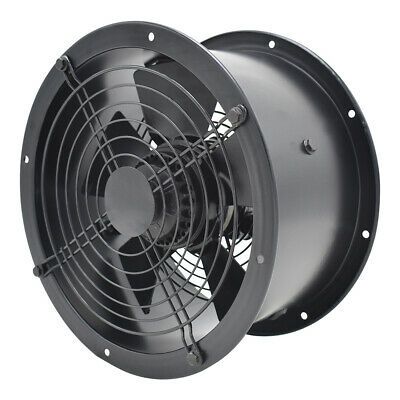
Centrifugal and axial fans suit different duties, and the correct choice depends on the pressure requirement, airflow, contamination level, location and noise target. A fan intended for a short, open exhaust path may perform poorly when connected to a long grease duct with several bends. Conversely, an unnecessarily aggressive fan can create excessive noise and building pressure problems.

Motor condition, bearings, belts, pulleys, isolators and electrical controls should be checked together. Noise or vibration is not automatically a motor failure. Loose mounting, an imbalanced impeller, contaminated blades, worn bearings or duct resonance can produce similar symptoms.

Controls should match the operating pattern. Restaurants may need dependable start-up before cooking begins, while industrial canteens may follow shift patterns. Simple, accessible controls and clear isolation points make maintenance safer and reduce confusion when multiple staff members operate the kitchen.

What makes Lynnwood different from a generic suburb job

Many Lynnwood premises sit in lower-rise office parks or neighbourhood centres. That can create practical roof access, but nearby offices and residential properties increase the importance of low-noise operation, discreet discharge placement and properly sealed ductwork.

That context changes how we think about extraction. Noise, odour, roof access, fire separation, power availability, operating hours and neighbouring occupancies all influence the practical solution. The same fan-and-duct arrangement that works in a standalone takeaway may be unsuitable in a managed commercial building or an industrial canteen.

We therefore use the local property type as part of the diagnosis, not as SEO decoration. The goal is to produce a page and a service scope that genuinely reflect how commercial kitchens operate in Lynnwood.

Maintenance for commercial kitchens

Planned maintenance helps prevent the gradual loss of performance that staff often adapt to without noticing. Filters become dirtier, belts loosen, bearings wear and grease accumulates inside the system. By the time smoke is visibly escaping, efficiency may have been declining for months.

Maintenance intervals should reflect cooking intensity rather than a one-size calendar. A high-volume frying operation creates a different contamination load from a café using light cooking equipment. Inspections can include fan condition, vibration, belt tension where applicable, electrical connections, accessible duct sections, filters and the general condition of the canopy.

Good maintenance records also help identify repeated faults. If the same motor, belt or control issue returns frequently, there may be an underlying airflow or installation problem that deserves a broader review instead of another isolated repair.

Additional local operating considerations

In Lynnwood, landlord and body-corporate requirements can influence the final route even in relatively small food premises. A technically straightforward wall discharge may be rejected if it affects a pedestrian area, neighbouring office or façade standard. Planning the route early therefore saves expensive changes after ceilings and finishes are complete. For cafés and professional-service buildings, low noise and discreet external equipment can be as important to the client as maximum airflow.

Where we see demand around Lynnwood

The local demand profile is broader than restaurants alone. Relevant premises include:

  • Café And Restaurant Kitchens
  • Office-Building Food Areas
  • Education-Linked Catering
  • Medical Facility Kitchens
  • Mixed-Use Retail Food Outlets

Each of these uses creates a different combination of heat, grease, odour, operating hours and maintenance access. That is why we avoid using one fixed fan size or one standard duct arrangement for every commercial kitchen.

Nearby coverage includes Hatfield, Menlyn, Pretoria East and Brooklyn Pretoria. These neighbouring areas are linked naturally because businesses often manage multiple sites, suppliers and staff across the same commercial corridor.

How to prepare for a site assessment in Lynnwood

Before requesting a visit, note the cooking equipment under the canopy, whether the extractor currently runs, the main symptom, operating hours and any recent changes to the kitchen. Photos of the canopy, filters, fan, motor label, controls and visible ducting are useful when they can be taken safely.

For new projects, floor plans and roof information help us understand likely duct routes. For repairs, a short history of the fault is more valuable: whether performance declined gradually, stopped suddenly, became noisy after maintenance, or changed after alterations to the building.

If the premises is managed by a landlord, body corporate or facilities team, confirm access requirements in advance. Roof keys, work permits and shutdown windows can otherwise delay a straightforward inspection.

Commercial Kitchen Extraction Lynnwood: FAQs

Do you install commercial kitchen extraction in Lynnwood?

Yes. We install and upgrade commercial kitchen extraction systems in Lynnwood for restaurants, canteens, hospitality venues, industrial premises and other food-service operations.

Do you repair extractor fans in Lynnwood?

Yes. We investigate fan failure, weak airflow, abnormal noise, vibration, tripping, motor problems and airflow restrictions in commercial extraction systems.

Can you work on canopies and ducting as well as the fan?

Yes. Our approach covers the complete extraction path, including canopies, filters, ductwork, fans, motors, controls and discharge arrangements where applicable.

Which nearby areas do you cover?

Coverage around Lynnwood includes Hatfield, Menlyn, Pretoria East and Brooklyn Pretoria. We also service commercial clients across the wider Gauteng province.

Can an old extraction system be upgraded instead of fully replaced?

Often yes. Reuse depends on condition, size, route, cleanliness, access and whether the existing components are suitable for the present cooking duty.

What should I send when requesting a quote?

Send the site location, business type, work required, cooking equipment, symptoms and clear photos of the canopy, fan, controls and visible ducting where safe to photograph.

Commercial kitchen extraction in managed and shared properties

Where a kitchen operates inside a managed building, extraction work has to consider more than the tenant space. Lynnwood projects may involve shared roofs, common plant zones or neighbouring offices, which means access and discharge routes need to fit the wider property. We identify those interfaces early so the installation does not create avoidable conflicts later.

A shared building also makes maintenance documentation more valuable. Knowing which isolator serves the kitchen fan, where access panels are located and how filters are removed helps facilities teams respond faster when performance changes. We encourage clear service access rather than hiding equipment behind fixed finishes that turn routine work into a building project.

For office and institutional kitchens, cooking load can vary sharply between ordinary days and catered events. The extraction system should be reviewed against the highest realistic load, while controls should still allow sensible operation during quieter periods. Variable control can help where the equipment and application support it, but only after the base airflow path is correct.

If odour or noise complaints are part of the repair request, we inspect the external discharge as well as the kitchen. A system can extract effectively at the hood and still create a nuisance if the outlet is poorly positioned. Fan replacement alone will not solve that, so the final recommendation covers the complete route.

  • Coordinate roof and plant access with property management
  • Keep isolators and cleaning points clearly accessible
  • Review external discharge when odour complaints occur

Need commercial kitchen extraction in Lynnwood?

Send us your site details, photos and the problem you need solved. We can assist with installation, repairs, ducting, fans, motors and system upgrades.

☎◉
WhatsAppCall Now