Spiral Circular Ducting
Assessment, installation, repair or integration of spiral circular ducting as part of the wider extraction and ventilation system.
Extraction ducting installation is the physical path that turns a fan into a working ventilation system. The route determines how much resistance the fan must overcome, where noise can develop, how easily the system can be maintained and whether contaminated air is actually carried to a suitable discharge point. We install and modify extraction ducting across Gauteng for commercial kitchens, workshops, plant areas and other premises requiring controlled air removal.
Send your Gauteng location and service requirement. For the fastest response, WhatsApp photos of the fan, canopy, ducting or fault after submitting.
Chat on WhatsAppExtraction ducting installation is the physical path that turns a fan into a working ventilation system. The route determines how much resistance the fan must overcome, where noise can develop, how easily the system can be maintained and whether contaminated air is actually carried to a suitable discharge point. We install and modify extraction ducting across Gauteng for commercial kitchens, workshops, plant areas and other premises requiring controlled air removal.
Our service covers new work, fault finding, repairs, replacements and practical upgrades where the site and existing equipment allow. We inspect the relevant equipment in context so that a weak-airflow complaint is not automatically treated as a fan replacement and a noisy system is not automatically treated as a motor fault.
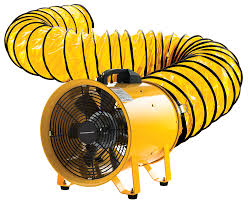
Assessment, installation, repair or integration of spiral circular ducting as part of the wider extraction and ventilation system.
Assessment, installation, repair or integration of rectangular sheet-metal ducting as part of the wider extraction and ventilation system.
Assessment, installation, repair or integration of transitions and reducers as part of the wider extraction and ventilation system.
Assessment, installation, repair or integration of branches and take-offs as part of the wider extraction and ventilation system.
Assessment, installation, repair or integration of duct supports and hangers as part of the wider extraction and ventilation system.
Assessment, installation, repair or integration of wall and roof discharge sections as part of the wider extraction and ventilation system.
A useful extraction ducting installation Gauteng service starts with the operating problem, not with a catalogue item. The first question is what air needs to be removed and why. In some sites the dominant load is heat; in others it is cooking vapour, odour, grease, workshop fumes or simply stale indoor air. That distinction changes the position of the extraction point, the airflow needed, the fan type and the route to discharge. We therefore look at the source, the occupied zone and the building envelope before deciding whether the answer is a new component, a repair or a wider system change.
For this service, six factors repeatedly shape the result: choosing a practical route before fabrication, circular versus rectangular duct decisions, bend radius and transition quality, together with support spacing and vibration isolation, coordination with ceilings, roofs and services, future access for inspection and cleaning. These factors are connected. Improving one while ignoring the others can shift the problem rather than solve it. For example, increasing fan capacity without checking the route and replacement-air path can create more noise, stronger negative pressure or little real improvement at the point where capture is needed.
The planning stage also establishes what can stay. Existing spiral circular ducting, rectangular sheet-metal ducting and transitions and reducers may still be useful if they are in sound condition and suited to the new duty. That matters on active Gauteng sites where unnecessary replacement increases cost and disruption. Where an existing part is limiting performance, the recommendation should explain the reason—capacity, condition, geometry, access or incompatibility—rather than simply proposing a larger or newer unit.
Airflow is often discussed as a single number, yet real extraction systems operate against resistance. Air has to enter the space, reach the source, pass through openings or filters, move through branches and take-offs and finally leave the building. Every restriction along that path affects performance. A fan that moves a large volume in free air can deliver much less once connected to a restrictive system. That is why equipment selection for extraction ducting installation Gauteng needs to consider both desired air volume and the resistance imposed by the installation.
The most useful site observations are practical. Does performance change when a door opens? Is one end of the system stronger than the other? Does the problem become worse at peak production or cooking load? Are there visible bends, crushed sections, dirty filters, blocked grilles or undersized transitions? Is the fan running at normal speed, and does it sound loaded or unstable? These clues help distinguish a fan problem from an air-path problem.
We also consider where replacement air comes from. When a system removes air continuously, the building must receive roughly corresponding air from somewhere. If there is no deliberate path, air may be dragged through door gaps, neighbouring rooms or loading areas. That can carry dust, odours or conditioned air in unwanted directions. Good extraction therefore means controlling both removal and replacement as far as the building and project scope allow.
The visible equipment is only part of the installation. Mounting, transitions, supports, electrical controls, access and isolation all affect reliability. With extraction ducting installation Gauteng, poorly supported equipment can transmit vibration into roofs or walls, while abrupt transitions can create turbulence and noise. Components such as duct supports and hangers and wall and roof discharge sections need to be positioned so they do their job without making future maintenance unnecessarily difficult.
Access is especially important on commercial and industrial sites. Filters, belts, bearings, motors, access panels and control isolators should not be buried behind permanent finishes when reasonable alternatives exist. Gauteng businesses often operate long hours, so a small design decision that allows a technician to inspect or replace a service item safely can reduce downtime years later. We consider how the system will be reached after ceilings, signage, kitchen equipment, racking or machinery are in place.
Commissioning should confirm more than whether the fan switches on. The practical check is whether air is moving where it is meant to move, whether noise and vibration are acceptable, whether the system responds correctly to controls and whether obvious leakage or recirculation is present. Where a system is an alteration rather than a completely new build, the new section must also be checked against the older equipment that remains in service.
Clients usually call after noticing symptoms such as systems with excessive pressure loss, leaking duct joints, poorly supported ductwork. Those symptoms are valuable because they show when and where the system is failing, but they do not identify the cause by themselves. Systems with excessive pressure loss could result from insufficient fan duty, a restriction, poor geometry, an electrical problem or a change elsewhere in the building. Diagnosis is faster when the operating history is known.
Other recurring complaints include vibration transferred into the building, routes blocked by later construction, fans connected through undersized transitions. Mechanical faults can develop gradually: bearings become noisy, belts lose tension, blades or impellers collect deposits, supports loosen and flexible connections deteriorate. Air-side faults can also build over time as filters load, ductwork becomes dirty or later building changes reduce the available inlet area. A maintenance visit should therefore look at both rotating equipment and the airflow path.
Where breakdowns repeat, replacing the same failed part is not enough. Repeated motor overheating, for example, may point to electrical supply issues, excessive mechanical load, blocked airflow, unsuitable duty or high operating temperature. Recurrent vibration may come from imbalance, poor mounting or resonance in attached ductwork. The objective is to remove the reason for failure where possible, not just restore operation temporarily.
A repair makes sense when the main assembly is structurally sound and the failed component can be restored without leaving an obvious system mismatch. Depending on the equipment, this might involve motors, bearings, drives, controls, supports, filters, panels or selected duct sections. An upgrade is more appropriate when the system still functions but no longer matches the site—for example after new cooking equipment, higher production, added partitions or a longer duct route.
Full replacement becomes more attractive when the equipment is badly deteriorated, repeatedly fails, cannot deliver the required duty or is difficult to maintain safely. Even then, the replacement should not be selected from the old model number alone. The surrounding system may have changed since the original installation, and the previous equipment may itself have been incorrectly selected. We re-check the duty and constraints before specifying a replacement approach.
For active businesses, sequencing matters. A restaurant, workshop or warehouse may not be able to stop operating for long periods. Where practical, work can be planned around quieter trading times, production windows or staged access. The quote should make clear what is being altered, what existing equipment remains, what assumptions depend on site access and what additional faults could only become visible after opening the system.
The service is relevant to commercial kitchens, workshops, warehouses, factories, but those categories cover very different operating patterns. A commercial kitchen may need intense extraction for shorter peak periods, while a factorie may operate more continuously. Equipment should be selected for the real duty cycle, contaminant and maintenance environment rather than using the same assumption for every commercial property.
The remaining applications—plant rooms, laundries, production areas, retail back-of-house spaces—also show why site context matters. Ceiling height, process position, occupancy, external wall access, roof construction and neighbouring properties all influence the practical solution. In a warehouse or industrial site, large roller doors can dominate the air path while open; in a restaurant or retail unit, the system may need to work consistently even when external doors remain closed.
We avoid claiming that one fan or one layout solves every application. Where the process creates hazardous dust, chemicals or specialised fumes, general ventilation may not be enough and specialist engineering, occupational-hygiene or fire-safety input may be required. Our role is to be clear about the extraction and ventilation scope we can inspect, install or repair and to avoid presenting general airflow equipment as a substitute for specialised controls.
Preventive maintenance is most effective when it addresses the things that gradually change performance: dirt accumulation, filter loading, belt condition, bearing wear, loose fixings, blocked openings and damaged duct connections. A system can lose useful airflow long before it fails completely. Regular checks help identify that decline while the equipment is still operating and repairs can be planned rather than handled as an emergency.
The maintenance frequency should reflect use. A high-duty kitchen or production area will not age at the same rate as a lightly used storeroom. Grease, dust, heat and continuous operation accelerate wear in different ways. Maintenance plans should therefore be based on visible condition, operating hours and the consequences of downtime. Where filters or access panels are intended for routine attention, staff should also know which tasks can be handled safely in-house and which require a technician.
Good records are useful for recurring faults. Noting motor replacements, belt changes, cleaning dates, vibration complaints or airflow changes creates a history that can reveal patterns. If the same bearing, motor or control fails unusually often, the history supports a deeper investigation. For multi-site Gauteng businesses, consistent records also make it easier to compare equipment performance between branches.
Extraction duct installation in Gauteng often has to work around dense existing services. Johannesburg commercial buildings can have crowded ceiling voids; Pretoria and Centurion sites may combine pitched roofs with later additions; East Rand workshops and factories often use high-level routes across open structures. Good planning before fabrication reduces unnecessary bends, awkward transitions and expensive rework.
Our coverage includes Johannesburg, Pretoria, Centurion, Midrand, Germiston, Boksburg, Kempton Park, Alberton, Roodepoort and Randburg, with surrounding suburbs handled according to access and scheduling. Local SEO pages are useful only when they correspond to real service coverage, so we use place names to explain building patterns and response areas rather than repeating identical suburb copy. A client in Johannesburg should still receive a recommendation based on the site, not a generic specification created for another town.
When requesting a quote for extraction ducting installation Gauteng, send the suburb, type of premises, photos of the equipment if safe to take, a description of the problem and whether the system is fully down or partly working. For new installations, include any available floor plan, cooking or process layout, intended fan position and route constraints. That information helps distinguish a straightforward service call from work that needs a more detailed site assessment.
These symptoms guide diagnosis, but the repair decision is made after considering the complete operating system and site conditions.
Continue into the related Gauteng service page for deeper installation, repair or system information.
Continue into the related Gauteng service page for deeper installation, repair or system information.
Continue into the related Gauteng service page for deeper installation, repair or system information.
Continue into the related Gauteng service page for deeper installation, repair or system information.
Continue into the related Gauteng service page for deeper installation, repair or system information.
The extraction source, required airflow, fan position, discharge location, route length, building constraints and access conditions all influence the installation.
Sometimes. The existing fan should be checked to determine whether it can overcome the resistance of the proposed route.
Yes. Commercial and light-industrial applications can include workshops, warehouses, plant areas and production spaces, subject to the contaminants and system requirements.
Yes where the surrounding system remains serviceable. The reason for the damage or leakage should also be addressed.
Yes. We cover Johannesburg, Pretoria, Centurion, Midrand, Germiston, Boksburg, Kempton Park, Alberton, Roodepoort, Randburg and surrounding areas.
Tell us the site location, type of premises and what the system is doing now. For urgent breakdowns, call so we can establish whether the equipment is completely stopped or still operating at reduced capacity.