Cooking-Line Canopies
Assessment, installation, repair or integration of cooking-line canopies as part of the wider extraction and ventilation system.
A restaurant extraction system has to do more than move air. It must capture cooking emissions at source, keep the kitchen workable during peak service, limit grease migration, discharge extracted air appropriately and remain accessible for inspection and maintenance. We work on restaurant extraction systems throughout Gauteng, from independent kitchens to busy multi-station operations.
Send your Gauteng location and service requirement. For the fastest response, WhatsApp photos of the fan, canopy, ducting or fault after submitting.
Chat on WhatsAppA restaurant extraction system has to do more than move air. It must capture cooking emissions at source, keep the kitchen workable during peak service, limit grease migration, discharge extracted air appropriately and remain accessible for inspection and maintenance. We work on restaurant extraction systems throughout Gauteng, from independent kitchens to busy multi-station operations.
Our work covers installation, repair, replacement and maintenance where appropriate. We do not assume that every airflow problem requires a new fan. The starting point is the job the system needs to do, the condition of the existing equipment and the route that air follows through the building.
Assessment, installation, repair or integration of cooking-line canopies as part of the wider extraction and ventilation system.
Assessment, installation, repair or integration of grease baffle filters as part of the wider extraction and ventilation system.
Assessment, installation, repair or integration of extract fans as part of the wider extraction and ventilation system.
Assessment, installation, repair or integration of duct risers as part of the wider extraction and ventilation system.
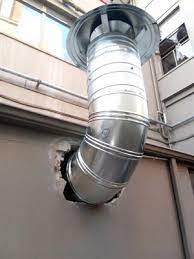
Assessment, installation, repair or integration of roof or wall discharge as part of the wider extraction and ventilation system.
Assessment, installation, repair or integration of access panels as part of the wider extraction and ventilation system.
What makes a restaurant extraction system work is one of the practical issues that determines whether restaurant extraction systems Gauteng performs reliably after installation. In a real commercial property, airflow is affected by more than the visible fan. The relationship between cooking-line canopies, grease baffle filters, extract fans, duct risers decides how easily air can move from the source to the final discharge point. A system can contain individually good components and still perform badly when those components are mismatched, restricted or arranged without enough attention to pressure losses and service access. Our approach is therefore to inspect the operating conditions and the complete route before recommending a change.
This matters particularly in Sandton, Rosebank, Fourways, where food and commercial premises range from stand-alone buildings to shopping-centre units, mixed-use properties and older buildings that have been adapted over time. Typical complaints such as canopy capture failing over grills or fryers, smoke rolling out during peak cooking, uneven extraction along a long canopy often develop gradually after equipment changes, poor maintenance, previous repairs or changes to the building. Rather than treating every complaint as a request for a larger fan, we separate the symptom from the cause and look for the point at which the system is losing capture, airflow or mechanical reliability.
For casual dining restaurants, fine-dining kitchens, fast-food outlets, the cost of poor extraction is operational as well as technical. Heat and fumes can make working conditions uncomfortable, odours can spread beyond the intended area, and a fan failure can interrupt normal trading. Planning what makes a restaurant extraction system work therefore includes access, operating hours and the likely consequences of downtime. Where an installation can be improved without replacing serviceable equipment, targeted work may be preferable; where the existing arrangement is fundamentally unsuitable, a wider upgrade is often the more dependable option.
Local SEO searches for restaurant extraction systems Gauteng often begin when a business already has a visible problem, but the best result comes from a site-specific solution rather than a generic product. We use the site type, cooking or process load, available duct route, existing electrical supply, fan location and maintenance access to guide the recommendation. That makes the finished work easier to operate and gives the client a clearer understanding of what was changed and why.
When we assess capture at fryers grills ovens and ranges, the first question is what the space actually needs the extraction system to achieve. Restaurant extraction systems gauteng can involve very different duties depending on whether the site is one of the fine-dining kitchens, fast-food outlets, takeaways. The contaminant load, heat output, operating hours and proximity to customers or neighbouring tenants all influence the required approach. A specification that is adequate for a light-duty preparation area may be unsuitable for a busy cooking line or an enclosed commercial space with limited natural ventilation.
The air path is then considered from capture to discharge. Components such as grease baffle filters, extract fans, duct risers, roof or wall discharge should work as one system, because resistance added at any point can reduce the airflow available where it matters. Bends, transitions, dirty filters, long duct routes, restrictive outlets and poorly selected fans all add pressure loss. This is why replacing a motor or fan without considering the connected system can leave the original performance complaint unresolved.
Across Rosebank, Fourways, Midrand, many commercial properties have constraints that only become obvious on site: roof access, shared walls, ceiling services, landlord rules, limited plant space or a discharge point close to occupied areas. These conditions influence how capture at fryers grills ovens and ranges can be addressed safely and practically. We plan around the building that exists, not an idealised drawing, while keeping future inspection and maintenance in mind.
A useful service visit should leave the client with more than a working fan. It should clarify whether smoke rolling out during peak cooking, uneven extraction along a long canopy, grease collecting where it should not came from mechanical failure, airflow restriction, installation layout, controls or a combination of causes. That distinction is important for budget decisions and for preventing repeat call-outs. Where there is uncertainty, staged repair and verification can be more sensible than replacing several components at once.
Island versus wall canopy considerations becomes especially important when a system has been altered over several years. A kitchen or commercial space may receive new equipment, partitions, ceilings or tenant changes while the original extraction arrangement remains untouched. In that situation, searches for restaurant extraction systems Gauteng are often triggered by symptoms such as uneven extraction along a long canopy, grease collecting where it should not, staff complaints about heat and fumes. The system may still run, but it no longer keeps up with the way the space is being used.
Our inspection considers the interaction between extract fans, duct risers, roof or wall discharge, access panels. We look for obvious mismatches, damaged connections, access limitations, noise or vibration sources and signs that the fan is working against unnecessary resistance. Where filters or duct sections are accessible, their condition can reveal whether the problem is maintenance-related or whether the design itself is limiting performance. The goal is to identify the smallest technically sensible intervention rather than assume the entire installation needs replacement.
For businesses in Fourways, Midrand, Randburg, response planning also matters. Restaurants and commercial premises often cannot simply close for a full day while exploratory work takes place. We therefore encourage clients to provide the site type, location, photographs where useful, the exact symptoms and whether the system is fully down or only under-performing. That information helps prioritise the visit and identify tools or likely components before attendance.
Businesses such as fast-food outlets, takeaways, pizza kitchens also benefit from thinking about maintenance at the same time as the immediate repair or upgrade. A component that is difficult to reach will be difficult to keep clean and inspect. A fan installed without proper isolation can transmit vibration into the structure. A duct route without sensible access can turn routine maintenance into a major job. Good island versus wall canopy considerations reduces these avoidable problems over the working life of the system.
There is no useful one-size-fits-all answer to balancing multiple cooking stations. With restaurant extraction systems Gauteng, the correct approach depends on how much contaminated air is generated, where it is generated, how far it must travel and what resistance the system creates along the route. The visible size of a fan or canopy is therefore only part of the picture. Airflow performance depends on the combined behaviour of duct risers, roof or wall discharge, access panels, motor and fan controls, along with the openings that allow replacement air back into the space.
Common service requests from Midrand, Randburg, Roodepoort include grease collecting where it should not, staff complaints about heat and fumes, persistent cooking odours outside the kitchen. Several of these symptoms can have more than one cause. Weak extraction may be caused by a tired fan, but it can also come from clogged filters or restrictive ducting. Noise may indicate bearings, imbalance or loose supports, while repeated motor overheating can point to mechanical resistance or unsuitable operating conditions. Proper fault finding prevents the wrong component from being blamed.
For takeaways, pizza kitchens, grill houses, reliability also means planning work around the way the business operates. Commercial systems often run for long hours and may be critical during lunch, dinner or production peaks. A repair that looks quick on paper can become disruptive if access is above a live kitchen or requires roof entry through occupied areas. We consider access and sequencing so the client can plan around the work with fewer surprises.
The local value of a specialist restaurant extraction systems Gauteng page is that it addresses the real questions Gauteng clients ask before booking: whether the existing system can be repaired, whether a larger fan is necessary, whether ducting needs alteration, how local site access affects the job and whether the work can be completed around trading hours. Those questions are answered more accurately after inspection, but explaining the decision process helps clients know what information to provide and what a professional assessment should cover.
Grease control through the air path is one of the practical issues that determines whether restaurant extraction systems Gauteng performs reliably after installation. In a real commercial property, airflow is affected by more than the visible fan. The relationship between roof or wall discharge, access panels, motor and fan controls, replacement-air arrangements decides how easily air can move from the source to the final discharge point. A system can contain individually good components and still perform badly when those components are mismatched, restricted or arranged without enough attention to pressure losses and service access. Our approach is therefore to inspect the operating conditions and the complete route before recommending a change.
This matters particularly in Randburg, Roodepoort, Alberton, where food and commercial premises range from stand-alone buildings to shopping-centre units, mixed-use properties and older buildings that have been adapted over time. Typical complaints such as staff complaints about heat and fumes, persistent cooking odours outside the kitchen, fan noise affecting customers often develop gradually after equipment changes, poor maintenance, previous repairs or changes to the building. Rather than treating every complaint as a request for a larger fan, we separate the symptom from the cause and look for the point at which the system is losing capture, airflow or mechanical reliability.
For pizza kitchens, grill houses, hotel restaurants, the cost of poor extraction is operational as well as technical. Heat and fumes can make working conditions uncomfortable, odours can spread beyond the intended area, and a fan failure can interrupt normal trading. Planning grease control through the air path therefore includes access, operating hours and the likely consequences of downtime. Where an installation can be improved without replacing serviceable equipment, targeted work may be preferable; where the existing arrangement is fundamentally unsuitable, a wider upgrade is often the more dependable option.
Local SEO searches for restaurant extraction systems Gauteng often begin when a business already has a visible problem, but the best result comes from a site-specific solution rather than a generic product. We use the site type, cooking or process load, available duct route, existing electrical supply, fan location and maintenance access to guide the recommendation. That makes the finished work easier to operate and gives the client a clearer understanding of what was changed and why.
When we assess restaurant odour and discharge positioning, the first question is what the space actually needs the extraction system to achieve. Restaurant extraction systems gauteng can involve very different duties depending on whether the site is one of the grill houses, hotel restaurants, food-court tenants. The contaminant load, heat output, operating hours and proximity to customers or neighbouring tenants all influence the required approach. A specification that is adequate for a light-duty preparation area may be unsuitable for a busy cooking line or an enclosed commercial space with limited natural ventilation.
The air path is then considered from capture to discharge. Components such as access panels, motor and fan controls, replacement-air arrangements, cooking-line canopies should work as one system, because resistance added at any point can reduce the airflow available where it matters. Bends, transitions, dirty filters, long duct routes, restrictive outlets and poorly selected fans all add pressure loss. This is why replacing a motor or fan without considering the connected system can leave the original performance complaint unresolved.
Across Roodepoort, Alberton, Germiston, many commercial properties have constraints that only become obvious on site: roof access, shared walls, ceiling services, landlord rules, limited plant space or a discharge point close to occupied areas. These conditions influence how restaurant odour and discharge positioning can be addressed safely and practically. We plan around the building that exists, not an idealised drawing, while keeping future inspection and maintenance in mind.
A useful service visit should leave the client with more than a working fan. It should clarify whether persistent cooking odours outside the kitchen, fan noise affecting customers, equipment changes that overload an older system came from mechanical failure, airflow restriction, installation layout, controls or a combination of causes. That distinction is important for budget decisions and for preventing repeat call-outs. Where there is uncertainty, staged repair and verification can be more sensible than replacing several components at once.
Restaurant owners often describe an extraction problem by the component they can see: the fan is weak or the canopy is not working. In practice, performance depends on a chain of components. The canopy has to catch the rising plume, filters have to allow air through while separating grease, ducting has to carry the required volume without excessive resistance, the fan has to overcome that resistance, and the discharge has to release air where it will not immediately cause another problem. A weakness at any point can reduce capture at the cooking line.
Different cooking methods also produce different challenges. Frying and grilling create grease and heat loads that are very different from light reheating or bakery preparation. Steam-producing equipment can demand good vapour capture even when grease is low. Open-flame and solid-fuel equipment can introduce additional considerations that need specialist review. For Gauteng restaurants, the system should therefore be considered in relation to the actual menu and equipment rather than selected from a generic restaurant fan size.
Long canopies are another area where system behaviour matters. If airflow is poorly distributed, one end of the canopy may capture strongly while another section spills smoke into the room. Filter arrangement, plenum design, duct take-off position and the available fan duty all influence that balance. When a client reports that only one cooking station is troublesome, we do not assume the entire system is undersized. The issue may be local to the canopy geometry, filter condition or duct connection serving that section.
Restaurant extraction should also be maintainable. Access to fans, motors, filters, duct inspection points and electrical isolators affects how quickly future faults can be diagnosed. A technically powerful system that cannot be safely reached becomes expensive to maintain. We therefore value straightforward service access and clear component identification, particularly for restaurants that operate long hours and cannot afford repeated exploratory call-outs.
These symptoms are useful starting points, but they are not a diagnosis on their own. Two sites with the same complaint can require completely different repairs.
We provide this service across Sandton, Rosebank, Fourways, Midrand, Randburg, Roodepoort, Alberton, Germiston, Boksburg, Kempton Park, Pretoria and Centurion, together with surrounding Gauteng suburbs where site access and scheduling allow. Commercial properties differ sharply across the province, so the local page is not intended to imply that every building requires the same fan, canopy or duct arrangement.
Johannesburg and Sandton projects often involve restaurants in mixed-use or retail settings, where roof access, neighbouring tenants and noise matter. East Rand areas such as Germiston, Boksburg and Kempton Park include a high concentration of commercial and light-industrial premises where longer duct routes, external fan positions and production schedules can influence the work. Pretoria, Centurion and Midrand combine hospitality, retail, offices and institutional kitchens, while Roodepoort, Randburg and Alberton include both stand-alone businesses and properties adapted from older building layouts.
Local SEO should match real service capability, which is why these pages use Gauteng place names naturally rather than creating dozens of near-identical suburb pages. Where a specific area already has an indexed service page on this website, we link to it contextually so users and search engines can move between the province-wide service topic and the local page that best matches the enquiry.
Explore the related service page for installation, repair, ducting or local Gauteng coverage.
Explore the related service page for installation, repair, ducting or local Gauteng coverage.
Explore the related service page for installation, repair, ducting or local Gauteng coverage.
Explore the related service page for installation, repair, ducting or local Gauteng coverage.
Explore the related service page for installation, repair, ducting or local Gauteng coverage.
Explore the related service page for installation, repair, ducting or local Gauteng coverage.
It is intended to capture and remove heat, smoke, steam, cooking odours and grease-laden air generated by commercial cooking before those contaminants spread through the kitchen and dining areas.
Possibly, but the answer depends on canopy length, cooking load, duct resistance, fan duty and system layout. Large or complex kitchens need site-specific assessment rather than a simple fan-size rule.
Yes. We troubleshoot fan, motor, vibration, control and airflow problems and can assess whether the fault is isolated to the fan or related to ducting, filters or the wider extraction system.
Yes. Our Gauteng coverage includes Johannesburg, Pretoria, Sandton, Midrand, Centurion, Randburg, Roodepoort, the East Rand and surrounding areas.
Yes, subject to inspection. Adding fryers, grills, ovens or other equipment can change heat and grease loads, so the existing canopy, airflow and duct arrangement may need to be reassessed.
Send the site location, type of premises and the symptoms or work required. For an urgent breakdown, calling is the fastest way to explain whether the extraction system is fully down or still operating at reduced performance.