Commercial Kitchen Extractor Repairs
Continue to the related Gauteng service page for deeper installation, repair, maintenance or system information.
Commercial extractor fan maintenance is about keeping airflow dependable before a small decline becomes a shutdown. Fans that run every day in restaurants, workshops, warehouses, laundries, production areas and service spaces are exposed to heat, grease, dust, vibration and long operating hours. Those conditions gradually change how a system performs. Bearings wear, belts lose tension, filters load, blades collect deposits, fixings loosen and electrical connections can deteriorate. A maintenance visit should therefore do more than confirm that the fan still turns. It should look for the early signs that performance, reliability or safety is being lost.
Send your Gauteng location and service requirement. For the fastest response, WhatsApp photos of the fan, canopy, ducting or fault after submitting.
Chat on WhatsAppCommercial extractor fan maintenance is about keeping airflow dependable before a small decline becomes a shutdown. Fans that run every day in restaurants, workshops, warehouses, laundries, production areas and service spaces are exposed to heat, grease, dust, vibration and long operating hours. Those conditions gradually change how a system performs. Bearings wear, belts lose tension, filters load, blades collect deposits, fixings loosen and electrical connections can deteriorate. A maintenance visit should therefore do more than confirm that the fan still turns. It should look for the early signs that performance, reliability or safety is being lost.
Our work covers assessment, installation, repair, maintenance and practical system improvements where those services fit the equipment and site. We use the actual fault, building layout and operating duty to guide recommendations rather than replacing equipment by default.
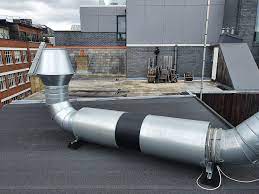
A useful maintenance programme has three goals: preserve airflow, reduce avoidable breakdowns and make equipment condition visible to the people responsible for the building. The first goal matters because a fan can continue running while moving less air than it once did. Staff may compensate by opening doors, running the fan continuously or accepting more heat and odour. The second goal is reliability. A worn belt, noisy bearing or loose electrical termination is usually easier to address before it causes an urgent stoppage. The third goal is decision quality. If a facilities manager knows which motors, bearings, filters and controls are repeatedly giving trouble, future repairs and replacements can be planned instead of guessed.
Maintenance frequency should reflect duty rather than a fixed calendar copied from another site. A takeaway kitchen working late every day loads an extraction system differently from a light-use office fan. A woodworking or fabrication area may introduce dust that affects blades and motors differently from grease in a kitchen. We therefore begin by understanding operating hours, contaminant, recent faults, cleaning practices, access and the consequence of downtime. That information helps decide what needs regular attention and what can simply be inspected periodically.
For Gauteng businesses with several branches, consistency is especially valuable. A repeatable checklist, photographs where appropriate and a simple service history make it easier to compare sites and identify equipment that is ageing faster than expected. The purpose is not paperwork for its own sake; it is to stop recurring faults from disappearing into separate call-outs.
A commercial extractor fan is part of a chain. The maintenance scope can include the fan wheel or impeller, motor, bearings, drive arrangement, guards, mounts, flexible connections, local isolators, controls and accessible duct connections. Where filters or canopies are part of the system, their condition matters because restriction upstream changes what the fan experiences. Where the discharge terminal is exposed on a roof, weather, debris and physical damage may also affect performance.
Noise is one of the best early warning signs. A change from a steady operating sound to grinding, rattling, scraping or pulsing should be investigated. Vibration can loosen fasteners and accelerate bearing wear. Deposits on a fan wheel can make it unbalanced. Belt-driven fans can become noisy when alignment or tension changes. Direct-drive motors can develop bearing noise that becomes more pronounced as temperature rises. Maintenance gives us the opportunity to separate these causes before the sound becomes a complete failure.
Electrical checks are equally important. A fan that struggles to start, trips intermittently or runs unusually hot should not be treated as a simple cleaning problem. Controls, contactors, capacitors on applicable equipment, isolators and terminations can all influence reliability. Where a fault falls outside the normal mechanical-extraction scope or requires specialist electrical work, that should be identified clearly rather than disguised as routine service.
Kitchen extraction requires a maintenance mindset that recognises grease and heat. Filters that are overloaded increase resistance. Grease deposits can collect on accessible fan components and around discharge points. Hinges, catches and access panels can become difficult to use if they are neglected. A maintenance visit should therefore coordinate with the site's cleaning regime rather than pretending mechanical service and hygiene are unrelated.
For restaurants in Sandton, Rosebank, Johannesburg CBD, Midrand, Pretoria and other dense commercial areas, access can be as important as the technical work. Fans may sit above ceilings, in service passages or on roofs shared with other tenants. Landlord access, safe roof entry and operating hours need to be considered. Many kitchens cannot simply close during lunch or dinner service, so planned work is normally arranged around quieter periods where practical.
We do not automatically claim cleaning certification as part of mechanical maintenance. Deep grease-duct cleaning can be a separate specialist scope. What we can do is identify visible build-up, airflow restrictions, damaged filters, fan condition and maintenance needs, then explain when cleaning or additional specialist attention should form part of the next action.
Industrial and workshop fans often fail for different reasons from kitchen systems. Dust, overspray, fibres, high ambient temperature, long operating shifts and process changes can all affect performance. A fan that was suitable when a workshop had two machines may become inadequate after production expands. Maintenance is therefore a useful opportunity to ask whether the system is still serving the process it was originally selected for.
In Boksburg, Germiston, Wadeville, Jet Park, Isando, Kempton Park and other industrial parts of Gauteng, we commonly think in terms of duty, accessibility and disruption. A fan may be mounted high on a wall or roof, connected to long duct runs or interlocked with other equipment. If the fan serves an occupied production area, downtime has a direct operational cost. Planned inspections can be coordinated with shutdown periods where access is safer and interference with production is reduced.
General ventilation is not a substitute for specialised hazardous-dust or chemical-fume control. Where a process creates a specific occupational hazard, the extraction design may need specialist engineering or hygiene input. Maintenance should make that boundary clearer, not blur it.
Book an assessment rather than waiting for the next planned interval if airflow has dropped, the fan has become noticeably louder, vibration can be felt through ductwork, the motor smells hot, the fan starts slowly, electrical protection trips, belts squeal, filters block unusually quickly or staff report that heat and odours are building up again. These symptoms do not all point to the same repair, but they do show that normal operation has changed.
A useful fault history can save time. Tell us when the symptom started, whether it is constant or intermittent, whether any alterations were made recently, whether the fan was cleaned or replaced, and whether the problem is worse when doors or windows are closed. That last detail can reveal replacement-air issues that a fan-only repair would miss.
Where equipment has stopped completely, avoid repeated resetting if it immediately trips again. Repeated starts can worsen an electrical or mechanical fault. The better route is to isolate the equipment where safe and arrange diagnosis.
We provide extractor fan maintenance across Johannesburg, Sandton, Midrand, Randburg, Roodepoort, Alberton, Germiston, Boksburg, Kempton Park, Edenvale, Centurion, Pretoria and surrounding Gauteng areas. Local conditions differ: shopping-centre tenants may depend on landlord service routes; industrial properties often have roof-mounted equipment; apartment and mixed-use buildings can have restricted access to common shafts.
For multi-site operators, we can structure visits around branch priority rather than treating every location identically. A high-duty kitchen can be checked more often than a lightly used storeroom fan. A site with repeated belt or bearing failures deserves deeper attention than a unit that has operated steadily for years. This risk-based approach keeps maintenance focused on what is likely to affect service continuity.
When requesting a quote, provide the suburb, type of premises, number of extraction fans if known, operating hours, recent faults and any access constraints. Photos of the fan, canopy, controls and discharge position are useful when safe to take.
An on-site assessment for commercial extractor fan maintenance begins with the complaint and then works outward. We do not start by assuming the most expensive component is at fault. We confirm what equipment is installed, how the space is used, how air enters the space and where extracted air is supposed to leave the building. We listen for abnormal mechanical noise, look for obvious restrictions and compare the current setup with the way the client says it performed previously. Where safe and appropriate, accessible controls, filters, grilles, duct connections and fan components are checked in context.
The building history matters. A restaurant may have added a fryer. A warehouse may have enclosed an area that was previously open. A homeowner may have replaced windows with tighter units. A shopping-centre tenant may have changed ceilings without realising an extraction grille was part of the old layout. These changes can alter airflow even if the fan itself has never been touched.
We also separate immediate faults from design limitations. A failed motor needs repair. A healthy but undersized fan needs a different conversation. A dirty filter needs cleaning, while a long restrictive duct may need route changes. Keeping those categories separate makes the recommendation easier to understand and reduces the chance of paying for a repair that cannot solve the real problem.
For commercial extractor fan maintenance, the right recommendation is not always a new fan. Repair is usually sensible when the existing equipment is fundamentally suitable, the fault is identifiable and parts are reasonably available. An upgrade may be better when the original equipment still works but the building or process has changed. Full replacement becomes more attractive when major parts are obsolete, corrosion is advanced, repeated breakdowns have occurred or the equipment was poorly selected from the beginning.
Cost should be considered together with downtime and access. Replacing a difficult roof-mounted fan involves more than the motor price. A restaurant may value a repair that can be completed before the next service period. A residential client may prefer replacement if repeated call-outs on an old cooker hood are likely. A facilities manager may want standardised equipment across several sites to simplify future spares.
We explain these trade-offs where the inspection provides enough information. The aim is a system that can be maintained and operated predictably, not simply a short-term fix that creates another call-out.
This page targets commercial extractor fan maintenance searches in Gauteng because the company genuinely serves the province. Local optimisation should help a customer understand where service is available and what kinds of local properties we encounter; it should not turn the page into a list of suburbs repeated for search engines. Johannesburg high-rises, Sandton offices, Midrand complexes, East Rand industrial premises, Pretoria institutions and West Rand stand-alone properties can present different access and ventilation constraints.
Those differences affect practical work. A roof fan on a Boksburg warehouse may be easy to isolate but require work-at-height planning. A Sandton restaurant in a shopping centre may need landlord permits and after-hours access. A Centurion townhouse may have limited external wall options. A Pretoria office may have a shared duct riser. We use these location details where they help explain the service rather than inserting place names into every paragraph.
Our core Gauteng coverage includes Johannesburg, Sandton, Randburg, Roodepoort, Midrand, Centurion, Pretoria, Alberton, Germiston, Boksburg, Kempton Park, Edenvale and surrounding areas. Availability for more distant parts of the province depends on the job and scheduling.
A useful quote request for commercial extractor fan maintenance includes the property suburb, building type and a short description of the problem or intended installation. If equipment already exists, send a clear photograph of the fan or hood, any model label that can be reached safely, the controls and the visible duct connection. Commercial clients should mention opening hours, access restrictions and whether the equipment is critical to daily operations.
For airflow complaints, tell us whether the system used to work better and whether opening a door or window changes the result. For noise complaints, describe the sound and when it occurs. For cleaning enquiries, state when the system was last cleaned if known and whether formal certification is required. For new installations, include room dimensions, process or cooking equipment and any known route to an exterior wall or roof.
Do not remove electrical covers, climb unsafe roofs or reach into moving equipment to collect information. A few safe photographs and a clear description are more useful than risky DIY investigation.
Continue to the related Gauteng service page for deeper installation, repair, maintenance or system information.
Continue to the related Gauteng service page for deeper installation, repair, maintenance or system information.
Continue to the related Gauteng service page for deeper installation, repair, maintenance or system information.
Continue to the related Gauteng service page for deeper installation, repair, maintenance or system information.
The interval depends on operating hours, contaminant, equipment type and the consequence of failure. High-duty kitchens and production areas usually need closer attention than light-use spaces.
Sometimes. Cleaning accessible components, correcting drive issues or identifying restrictions can restore lost performance, but weak airflow caused by poor design or undersized equipment may need a wider system change.
Yes, where safe access is available and the equipment falls within our extraction and ventilation scope.
Yes. Multi-site maintenance can be organised around site priority, access and operating schedules.
Mechanical extractor maintenance is different from certified deep-cleaning services. We avoid claiming certification unless it is specifically part of the agreed service.
Tell us the site location, property type and what you need help with. For faults, describe whether the equipment is completely stopped, noisy or still operating with reduced airflow.