Extraction Canopy Cleaning
Continue to the related Gauteng service page for deeper installation, repair, maintenance or system information.
Commercial kitchen extraction cleaning addresses the grease, smoke residue and cooking deposits that accumulate as air moves from the cooking line into the canopy, filters, duct route and fan. When these deposits build up, airflow can fall, odours can linger and mechanical components can work under more difficult conditions. Cleaning should therefore be viewed as part of extraction-system care, not simply as a cosmetic kitchen task. We help Gauteng food businesses assess extraction cleanliness, service accessible components and coordinate mechanical repairs where grease or dirt is contributing to poor performance.
Send your Gauteng location and service requirement. For the fastest response, WhatsApp photos of the fan, canopy, ducting or fault after submitting.
Chat on WhatsAppCommercial kitchen extraction cleaning addresses the grease, smoke residue and cooking deposits that accumulate as air moves from the cooking line into the canopy, filters, duct route and fan. When these deposits build up, airflow can fall, odours can linger and mechanical components can work under more difficult conditions. Cleaning should therefore be viewed as part of extraction-system care, not simply as a cosmetic kitchen task. We help Gauteng food businesses assess extraction cleanliness, service accessible components and coordinate mechanical repairs where grease or dirt is contributing to poor performance.
Our work covers assessment, installation, repair, maintenance and practical system improvements where those services fit the equipment and site. We use the actual fault, building layout and operating duty to guide recommendations rather than replacing equipment by default.
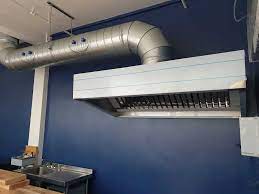
A kitchen extraction system is designed to capture contaminated air close to the cooking process and move it away from occupied areas. Every part of that path can collect deposits. Filters are the first visible point, but grease can continue into plenums, accessible ductwork, fan housings and discharge areas. As deposits accumulate they can narrow passages, load filters and disturb fan balance. The result may be weaker capture at the canopy even though the fan still sounds as if it is running normally.
Cleaning is most effective when it is matched to cooking intensity. A charcoal grill, fryer line or high-volume takeaway can create a different grease load from a small café warming light meals. The inspection should therefore consider menu, operating hours, filter type, cleaning history and how quickly visible deposits return. A fixed schedule copied from another kitchen can be either too frequent or not frequent enough.
Where heavy deposits are hidden deep inside ductwork, specialist deep-cleaning access and methods may be required. We avoid presenting a superficial wipe-down as a complete duct clean. The objective is to identify what is accessible, what needs specialist attention and whether mechanical faults are also present.
The canopy is the point kitchen staff see every day, so it often receives the most attention. However, cleaning only the external stainless-steel surface does not tell you what is happening behind filters or in the extraction path. Filters should be removed and inspected according to their type. Damaged, missing or badly fitting filters can allow more grease downstream. Filters that are physically clogged may restrict airflow long before the rest of the system is obviously dirty.
A canopy inspection can also reveal loose panels, broken catches, poorly seated filters, lighting damage and signs that grease is escaping into joints. Where the canopy is not capturing smoke across the full cooking line, cleaning may help but the real issue may be airflow, canopy position or changes to cooking equipment. We therefore treat cleaning and performance diagnosis as connected but separate questions.
For restaurants and takeaways in Johannesburg, Sandton, Midrand, Pretoria, Centurion and the East Rand, after-hours access is often preferred because cleaning can be disruptive. The practical plan should consider when the kitchen is cool, when equipment can be safely covered or moved, and how the area will be returned to service.
Grease or dust on a fan wheel can change balance and increase vibration. A heavily contaminated housing can also make inspection difficult. Cleaning the fan area gives the technician a clearer view of bearings, mounts, belts where applicable, flexible connections and other mechanical details. It can therefore reveal problems that were hidden by deposits.
The fan should not simply be pressure-washed or treated as ordinary kitchen equipment. Motors, electrical components, bearings and coatings can be damaged by the wrong method. The cleaning approach must suit the fan construction and access. Where deposits are severe, the fan may need partial disassembly by competent personnel rather than aggressive cleaning in place.
After cleaning, performance should be observed. If airflow remains poor, the next questions include duct restriction, fan condition, rotation, drive performance, replacement air and whether the system is correctly sized for the current cooking load.
Kitchen extraction ductwork can travel horizontally above ceilings, vertically through risers or externally to a roof discharge. Deposits can occur far from the canopy. Deep duct cleaning is specialised work because access panels, internal reach, containment and verification all matter. A system with long inaccessible sections may need additional access before it can be cleaned properly.
We distinguish between accessible extraction cleaning and full deep-duct cleaning. If a client needs formal certification or a specific standard-based cleaning record, that requirement should be stated before work starts so the correct specialist scope is arranged. We do not imply certification automatically.
From an SEO and service perspective this distinction is important because customers searching for “extractor cleaning” can mean very different things: wiping a household cooker hood, degreasing a restaurant canopy, cleaning filters, cleaning a roof fan or performing a full commercial duct clean. The site and quote should identify which service is actually required.
Cleaning can restore lost airflow when restriction or imbalance is caused by deposits, but it cannot correct every extraction problem. A fan with failed bearings, a burnt motor, wrong rotation, a damaged capacitor on applicable equipment or a broken drive belt needs repair. A system with an undersized fan, excessive duct resistance or inadequate replacement air may need design changes. A canopy that is too small for the cooking line may continue spilling fumes even after it is spotless.
This is why we ask about symptoms before recommending a cleaning-only visit. If the complaint is “grease is visible,” cleaning may be the main need. If the complaint is “smoke escapes into the dining area,” we also need to think about airflow and capture. If the complaint is “the fan trips after ten minutes,” mechanical or electrical diagnosis takes priority.
Separating these causes prevents repeated spending on cleaning when the real issue sits elsewhere in the system.
We assist commercial kitchens across Gauteng, including Johannesburg, Sandton, Randburg, Roodepoort, Midrand, Alberton, Germiston, Boksburg, Kempton Park, Edenvale, Centurion and Pretoria. The type of premises shapes access. Shopping-centre restaurants may have shared risers and strict working windows. Stand-alone restaurants may have roof fans that are easier to reach but more exposed to weather. Hotels, hospitals and institutional kitchens may require work to be coordinated around continuous food service.
When enquiring, send the suburb, type of kitchen, approximate operating hours, whether the system is working, when it was last cleaned if known, and photos of the canopy, filters and fan where safe. If there is a formal compliance or certification requirement, state it clearly so the correct scope can be considered from the start.
An on-site assessment for commercial kitchen extraction cleaning begins with the complaint and then works outward. We do not start by assuming the most expensive component is at fault. We confirm what equipment is installed, how the space is used, how air enters the space and where extracted air is supposed to leave the building. We listen for abnormal mechanical noise, look for obvious restrictions and compare the current setup with the way the client says it performed previously. Where safe and appropriate, accessible controls, filters, grilles, duct connections and fan components are checked in context.
The building history matters. A restaurant may have added a fryer. A warehouse may have enclosed an area that was previously open. A homeowner may have replaced windows with tighter units. A shopping-centre tenant may have changed ceilings without realising an extraction grille was part of the old layout. These changes can alter airflow even if the fan itself has never been touched.
We also separate immediate faults from design limitations. A failed motor needs repair. A healthy but undersized fan needs a different conversation. A dirty filter needs cleaning, while a long restrictive duct may need route changes. Keeping those categories separate makes the recommendation easier to understand and reduces the chance of paying for a repair that cannot solve the real problem.
For commercial kitchen extraction cleaning, the right recommendation is not always a new fan. Repair is usually sensible when the existing equipment is fundamentally suitable, the fault is identifiable and parts are reasonably available. An upgrade may be better when the original equipment still works but the building or process has changed. Full replacement becomes more attractive when major parts are obsolete, corrosion is advanced, repeated breakdowns have occurred or the equipment was poorly selected from the beginning.
Cost should be considered together with downtime and access. Replacing a difficult roof-mounted fan involves more than the motor price. A restaurant may value a repair that can be completed before the next service period. A residential client may prefer replacement if repeated call-outs on an old cooker hood are likely. A facilities manager may want standardised equipment across several sites to simplify future spares.
We explain these trade-offs where the inspection provides enough information. The aim is a system that can be maintained and operated predictably, not simply a short-term fix that creates another call-out.
This page targets commercial kitchen extraction cleaning searches in Gauteng because the company genuinely serves the province. Local optimisation should help a customer understand where service is available and what kinds of local properties we encounter; it should not turn the page into a list of suburbs repeated for search engines. Johannesburg high-rises, Sandton offices, Midrand complexes, East Rand industrial premises, Pretoria institutions and West Rand stand-alone properties can present different access and ventilation constraints.
Those differences affect practical work. A roof fan on a Boksburg warehouse may be easy to isolate but require work-at-height planning. A Sandton restaurant in a shopping centre may need landlord permits and after-hours access. A Centurion townhouse may have limited external wall options. A Pretoria office may have a shared duct riser. We use these location details where they help explain the service rather than inserting place names into every paragraph.
Our core Gauteng coverage includes Johannesburg, Sandton, Randburg, Roodepoort, Midrand, Centurion, Pretoria, Alberton, Germiston, Boksburg, Kempton Park, Edenvale and surrounding areas. Availability for more distant parts of the province depends on the job and scheduling.
A useful quote request for commercial kitchen extraction cleaning includes the property suburb, building type and a short description of the problem or intended installation. If equipment already exists, send a clear photograph of the fan or hood, any model label that can be reached safely, the controls and the visible duct connection. Commercial clients should mention opening hours, access restrictions and whether the equipment is critical to daily operations.
For airflow complaints, tell us whether the system used to work better and whether opening a door or window changes the result. For noise complaints, describe the sound and when it occurs. For cleaning enquiries, state when the system was last cleaned if known and whether formal certification is required. For new installations, include room dimensions, process or cooking equipment and any known route to an exterior wall or roof.
Do not remove electrical covers, climb unsafe roofs or reach into moving equipment to collect information. A few safe photographs and a clear description are more useful than risky DIY investigation.
A cleaning schedule should follow what the kitchen actually cooks. Fryers generate fine grease aerosol that can travel beyond the filters. Charcoal and open-flame cooking add smoke and carbonised deposits. Wok cooking can create high heat and vapour loads concentrated over a small area. Bakeries often have a different mix of flour dust, heat and light grease, while cafés with limited hot food may load the system more slowly. Treating these kitchens as identical produces maintenance intervals that are either wasteful or inadequate.
The rate of visible loading is useful evidence. If filters become greasy very quickly after cleaning, check whether the cooking duty has changed, whether filters fit correctly and whether airflow is pulling contaminants through the intended path. If deposits appear mainly at one end of a canopy, airflow distribution or equipment position may deserve attention. If the roof fan is heavily contaminated while the canopy looks reasonably clean, filter bypass or poor filter condition may be allowing more grease downstream.
Cleaning records become valuable over time because they show how fast the system changes between visits. A restaurant group with several Gauteng branches can compare similar kitchens and identify sites that are loading unusually quickly. That difference may point to menu, operating hours, extraction performance or cleaning practice. The goal is not to clean on the shortest possible interval; it is to keep contamination under control with a schedule that reflects real duty and to investigate abnormal patterns instead of accepting them.
Continue to the related Gauteng service page for deeper installation, repair, maintenance or system information.
Continue to the related Gauteng service page for deeper installation, repair, maintenance or system information.
Continue to the related Gauteng service page for deeper installation, repair, maintenance or system information.
Continue to the related Gauteng service page for deeper installation, repair, maintenance or system information.
We assist with extraction cleaning and mechanical service within our scope. Full deep-duct cleaning or certified cleaning may require a specialist scope that should be confirmed before work begins.
Yes. Loaded filters add resistance and can reduce airflow through the canopy.
It can help if deposits are causing imbalance, but bearing, motor, mounting or drive faults may still need repair.
Yes, canopy and filter cleaning can form part of the service scope where appropriate.
Johannesburg, Sandton, Midrand, Roodepoort, Randburg, Alberton, Germiston, Boksburg, Kempton Park, Pretoria and surrounding areas.
Tell us the site location, property type and what you need help with. For faults, describe whether the equipment is completely stopped, noisy or still operating with reduced airflow.