Commercial Extractor Fan Repairs
Continue to the related Gauteng service page for deeper installation, repair, maintenance or system information.
An extractor fan that is not working can fail in several different ways: completely dead, humming without turning, starting and stopping, tripping power, running only on one speed or appearing to operate while moving almost no air. The fastest repair comes from identifying which failure pattern is present instead of replacing parts at random. We diagnose non-working extractor fans across Gauteng in homes, restaurants, offices, workshops, warehouses and other commercial premises.
Send your Gauteng location and service requirement. For the fastest response, WhatsApp photos of the fan, canopy, ducting or fault after submitting.
Chat on WhatsAppAn extractor fan that is not working can fail in several different ways: completely dead, humming without turning, starting and stopping, tripping power, running only on one speed or appearing to operate while moving almost no air. The fastest repair comes from identifying which failure pattern is present instead of replacing parts at random. We diagnose non-working extractor fans across Gauteng in homes, restaurants, offices, workshops, warehouses and other commercial premises.
Our work covers assessment, installation, repair, maintenance and practical system improvements where those services fit the equipment and site. We use the actual fault, building layout and operating duty to guide recommendations rather than replacing equipment by default.
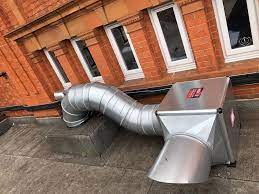
“Not working” is useful as a starting point, but the detail matters. A completely silent fan may have no supply, a failed switch, control issue, open circuit or motor fault. A fan that hums may be receiving power but unable to rotate because of a seized bearing, obstructed wheel or failed starting component on applicable motors. A fan that runs briefly and stops may be overheating or being interrupted by protection. A fan that repeatedly trips a breaker should not be reset indefinitely.
Before a visit, note what happens when the fan is switched on and whether lights or other functions on the same appliance still work. For a cooker hood, tell us whether the lights work even though the motor does not. For a commercial fan, tell us whether the contactor pulls in or the control panel shows any fault indication. These observations can narrow the likely area without encouraging unsafe DIY electrical testing.
If there is burning smell, visible arcing, smoke or repeated tripping, isolate the equipment where safe and stop trying to run it.
Household cooker hoods can fail at the controls, motor, speed selector, internal wiring or supply. Some units use electronic boards; others use simpler switches and capacitors. Grease contamination can also stiffen components and make a weak motor harder to start. Integrated hoods can be particularly awkward to inspect because access is restricted by cabinetry.
The diagnosis should establish whether repair is sensible relative to the unit's age and parts availability. A premium hood with an available motor or control component may justify repair. A very old basic unit with extensive damage can be more economical to replace. Where replacement is chosen, the duct connection and available space should be checked so the new hood does not create another problem.
We work on selected kitchen extractor fans across Gauteng and can also assess installation issues where a replacement fan is required.
Commercial fans often operate for longer hours and may be controlled through contactors, isolators, interlocks or building-management arrangements. A fault can therefore sit in the motor, drive, local control or upstream control logic. Belt-driven equipment adds possible belt failure, pulley issues and bearing faults. Roof fans can also be affected by weather exposure and debris.
For restaurants, workshops and warehouses, the consequence of downtime is often more important than the fan itself. Heat, fumes and odours can build quickly. We therefore ask whether the fan serves a critical process, whether there is another fan available and whether the system can operate safely at reduced capacity. Temporary operating decisions belong to the site manager; our role is to diagnose the equipment and explain the repair path.
A stopped fan should also prompt inspection of filters and duct conditions. If the motor failed after operating under unusually high resistance, simply replacing the motor without addressing the system load can shorten the life of the new component.
Electrical tripping can indicate short circuits, insulation breakdown, motor winding problems, damaged cables, water ingress, failed controls or mechanical overload that causes excessive current. It is not a symptom to bypass. Repeatedly resetting protection can worsen damage and creates risk.
The safe diagnostic process involves appropriate electrical testing by competent personnel. The mechanical side should also be checked: a seized bearing, obstructed wheel or tight drive can make a motor draw abnormal current. In kitchen systems, contamination and heat can contribute indirectly by increasing load or damaging components.
If a fan trips only after several minutes, temperature may be relevant. If it trips instantly, the pattern is different. Tell us how quickly the trip occurs and whether it affects a local breaker, main breaker or dedicated protection.
Not every dead extractor fan should be repaired indefinitely. Replacement becomes more attractive when major components are unavailable, the housing is badly corroded, the fan was undersized from the start, repeated faults have occurred or the building use has changed. A new fan also creates an opportunity to correct obvious access, noise or performance problems—provided the rest of the system is assessed at the same time.
For domestic installations, replacement selection should consider cabinet dimensions, duct diameter, discharge route and electrical connection. For commercial systems, airflow duty, pressure, temperature, contaminant and control arrangement matter more. A visually similar fan is not necessarily an equivalent replacement.
We therefore separate the question “can this motor turn again?” from the broader question “is this the right equipment to keep serving this site?”
We cover Johannesburg, Sandton, Randburg, Roodepoort, Midrand, Alberton, Germiston, Boksburg, Kempton Park, Edenvale, Centurion, Pretoria and surrounding Gauteng areas. For quicker triage, send the suburb, fan type, building type, what happens when switched on, any noise or smell, whether protection trips and photographs of the fan or cooker hood where safe.
Commercial clients should also mention operating hours and whether the fan serves a kitchen, workshop, warehouse, ablution area or other space. That context affects both diagnosis and urgency.
An on-site assessment for extractor fan not working begins with the complaint and then works outward. We do not start by assuming the most expensive component is at fault. We confirm what equipment is installed, how the space is used, how air enters the space and where extracted air is supposed to leave the building. We listen for abnormal mechanical noise, look for obvious restrictions and compare the current setup with the way the client says it performed previously. Where safe and appropriate, accessible controls, filters, grilles, duct connections and fan components are checked in context.
The building history matters. A restaurant may have added a fryer. A warehouse may have enclosed an area that was previously open. A homeowner may have replaced windows with tighter units. A shopping-centre tenant may have changed ceilings without realising an extraction grille was part of the old layout. These changes can alter airflow even if the fan itself has never been touched.
We also separate immediate faults from design limitations. A failed motor needs repair. A healthy but undersized fan needs a different conversation. A dirty filter needs cleaning, while a long restrictive duct may need route changes. Keeping those categories separate makes the recommendation easier to understand and reduces the chance of paying for a repair that cannot solve the real problem.
For extractor fan not working, the right recommendation is not always a new fan. Repair is usually sensible when the existing equipment is fundamentally suitable, the fault is identifiable and parts are reasonably available. An upgrade may be better when the original equipment still works but the building or process has changed. Full replacement becomes more attractive when major parts are obsolete, corrosion is advanced, repeated breakdowns have occurred or the equipment was poorly selected from the beginning.
Cost should be considered together with downtime and access. Replacing a difficult roof-mounted fan involves more than the motor price. A restaurant may value a repair that can be completed before the next service period. A residential client may prefer replacement if repeated call-outs on an old cooker hood are likely. A facilities manager may want standardised equipment across several sites to simplify future spares.
We explain these trade-offs where the inspection provides enough information. The aim is a system that can be maintained and operated predictably, not simply a short-term fix that creates another call-out.
This page targets extractor fan not working searches in Gauteng because the company genuinely serves the province. Local optimisation should help a customer understand where service is available and what kinds of local properties we encounter; it should not turn the page into a list of suburbs repeated for search engines. Johannesburg high-rises, Sandton offices, Midrand complexes, East Rand industrial premises, Pretoria institutions and West Rand stand-alone properties can present different access and ventilation constraints.
Those differences affect practical work. A roof fan on a Boksburg warehouse may be easy to isolate but require work-at-height planning. A Sandton restaurant in a shopping centre may need landlord permits and after-hours access. A Centurion townhouse may have limited external wall options. A Pretoria office may have a shared duct riser. We use these location details where they help explain the service rather than inserting place names into every paragraph.
Our core Gauteng coverage includes Johannesburg, Sandton, Randburg, Roodepoort, Midrand, Centurion, Pretoria, Alberton, Germiston, Boksburg, Kempton Park, Edenvale and surrounding areas. Availability for more distant parts of the province depends on the job and scheduling.
A useful quote request for extractor fan not working includes the property suburb, building type and a short description of the problem or intended installation. If equipment already exists, send a clear photograph of the fan or hood, any model label that can be reached safely, the controls and the visible duct connection. Commercial clients should mention opening hours, access restrictions and whether the equipment is critical to daily operations.
For airflow complaints, tell us whether the system used to work better and whether opening a door or window changes the result. For noise complaints, describe the sound and when it occurs. For cleaning enquiries, state when the system was last cleaned if known and whether formal certification is required. For new installations, include room dimensions, process or cooking equipment and any known route to an exterior wall or roof.
Do not remove electrical covers, climb unsafe roofs or reach into moving equipment to collect information. A few safe photographs and a clear description are more useful than risky DIY investigation.
There are a few observations a customer can make without opening electrical covers or touching moving parts. Confirm whether the fan has an obvious local switch or isolator and whether it is in its normal position. Check whether another appliance on the same circuit has also lost power. For a cooker hood, note whether the lights operate and whether any speed button produces a sound. For a bathroom fan, note whether it is normally linked to the light, a timer or a separate switch. For commercial equipment, look only at visible control indicators and record any displayed fault message.
Do not remove guards, spin blades by hand through openings, bridge switches or repeatedly reset a breaker. These actions can expose live parts or worsen a mechanical problem. If the fan smells burnt, has visible damage, trips protection repeatedly or makes a severe grinding noise, leave it off where safe until inspected.
Providing accurate observations helps the technician arrive with a better understanding of the likely fault family. It does not replace on-site testing, but it can distinguish a total power loss from a motor that is energising but not rotating. This is particularly useful for commercial clients who need to decide whether the problem is urgent enough for immediate attention or can be planned into the next maintenance window.
Service work often happens in buildings that must remain operational. We plan access so kitchens, offices, homes or workshops are disrupted as little as practical. Commercial clients should tell us about security procedures, roof permits, landlord approvals, loading-bay access and the times when noisy work is restricted. Residential clients should mention apartment rules, shared shafts and whether exterior work requires body-corporate approval. Good access planning is not administrative detail; it determines whether equipment can be inspected safely and whether the proposed repair or installation is practical.
Where work at height, electrical isolation or concealed building services are involved, the job may need additional preparation before tools are used. We prefer to identify those constraints early rather than arrive with an unrealistic assumption that every fan is reachable from a stepladder. Gauteng properties range from single-storey homes to shopping centres, factories and high-rise buildings, so the service method needs to match the site.
After work is completed, we explain the observed fault or installation choices in straightforward terms and identify maintenance points that the owner or facilities team should watch. The purpose is to leave the client with a clearer understanding of the system, not only a switched-on fan.
Continue to the related Gauteng service page for deeper installation, repair, maintenance or system information.
Continue to the related Gauteng service page for deeper installation, repair, maintenance or system information.
Continue to the related Gauteng service page for deeper installation, repair, maintenance or system information.
Continue to the related Gauteng service page for deeper installation, repair, maintenance or system information.
Possible causes include supply, switch, control, wiring or motor faults. Diagnosis is needed to identify which part of the circuit has failed.
The motor may be unable to start because of mechanical seizure, obstruction or an electrical starting fault, depending on the fan type.
No. Repeated tripping should be investigated rather than bypassed or repeatedly reset.
Yes, selected residential, commercial and industrial extraction fans are within our service scope.
Yes, we work across Gauteng including Pretoria, Centurion, Boksburg, Germiston and Kempton Park.
Tell us the site location, property type and what you need help with. For faults, describe whether the equipment is completely stopped, noisy or still operating with reduced airflow.