Extractor Duct Cleaning
Continue to the related Gauteng service page for deeper installation, repair, maintenance or system information.
Weak extractor fan suction is one of the most common complaints in kitchens, bathrooms and commercial ventilation systems, but the fan motor is only one possible cause. Filters can restrict airflow, ducting can be blocked or undersized, dampers can stick, fan wheels can become dirty, belts can slip and the room itself can lack enough replacement air. We diagnose poor extraction across Gauteng by looking at the complete air path from the source to the final discharge.
Send your Gauteng location and service requirement. For the fastest response, WhatsApp photos of the fan, canopy, ducting or fault after submitting.
Chat on WhatsAppWeak extractor fan suction is one of the most common complaints in kitchens, bathrooms and commercial ventilation systems, but the fan motor is only one possible cause. Filters can restrict airflow, ducting can be blocked or undersized, dampers can stick, fan wheels can become dirty, belts can slip and the room itself can lack enough replacement air. We diagnose poor extraction across Gauteng by looking at the complete air path from the source to the final discharge.
Our work covers assessment, installation, repair, maintenance and practical system improvements where those services fit the equipment and site. We use the actual fault, building layout and operating duty to guide recommendations rather than replacing equipment by default.
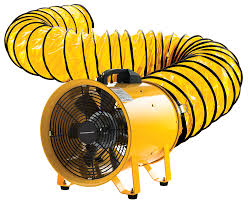
People often assume that if they can hear the fan, the fan is doing its job. In reality, a motor can run while airflow is far below what the room or process needs. A worn drive can reduce fan speed. A dirty wheel can lose efficiency. A damaged blade can move less air. The fan can also be healthy while filters, ducting or grilles create too much resistance.
The first diagnostic question is whether the system was ever satisfactory. If extraction used to be strong and gradually became weak, contamination or wear becomes more likely. If it has always been weak, the original selection, duct size or building-air balance may be the real issue. If performance changed immediately after renovation, a blocked branch, new ceiling, closed vent or altered door arrangement can be responsible.
This timeline prevents us from treating every weak-airflow complaint as the same repair.
In kitchen systems, filters are an obvious restriction point. Grease-loaded filters can significantly reduce airflow. In bathrooms and general ventilation, grilles can collect dust and lint. Decorative covers installed during renovations can also reduce free area. The inlet should therefore be inspected before more expensive components are changed.
However, simply removing filters is not a permanent solution. Commercial kitchen filters serve an important role in controlling grease entry into the system. If removing them makes a dramatic difference, the correct next step is to clean or replace suitable filters and confirm that the fan and ductwork remain appropriate.
The same principle applies to blocked external louvres and insect screens. A system is only as open as its most restrictive point.
Ductwork creates resistance even when perfectly clean. Long runs, small diameters, sharp bends, abrupt transitions and flexible duct can all increase pressure loss. If the fan was selected without considering that resistance, suction at the room can be disappointing. Over time, grease, dust, damaged sections or partially closed dampers can add more restriction.
Leaks create a different problem. A fan may move plenty of air near itself while the capture point receives little because the duct between them is disconnected or split. In ceiling spaces, this can go unnoticed while extracted moisture or grease is discharged into the building void.
Inspection should therefore consider both blockage and integrity. A stronger fan is not automatically the answer to a poor duct route; it can add noise and energy use without solving the underlying limitation.
Every cubic metre of air extracted from a room has to be replaced. If doors and windows are tightly sealed and there is no planned supply-air path, the room can become negatively pressurised. The extractor then works harder to pull air from gaps, and performance can fall. A simple clue is that extraction improves noticeably when a door or window is opened.
Commercial kitchens are particularly sensitive because large extraction rates can exceed the amount of air entering naturally. This can affect door operation, comfort and even other building systems. Mechanical supply air or better transfer paths may be needed depending on the site.
In bathrooms, the problem can be simpler: a door with almost no undercut can starve a small extractor. The fan may be perfectly healthy but unable to pull enough replacement air into the room.
Mechanical faults still matter. Worn bearings, slipping belts, incorrect rotation, damaged blades, motor speed issues and heavy deposits can all reduce performance. A recently replaced motor may be connected incorrectly or paired with an existing impeller that is in poor condition. A fan selected for free-air duty may struggle when connected to a real duct system with significant resistance.
Testing and observation should establish whether the fan is reaching normal operating speed and whether the wheel rotates in the intended direction. Commercial equipment can also have dampers or speed controls that limit output.
If the fan is clearly undersized for the current duty, repeated repairs will not create the missing capacity. The system may need resizing.
We diagnose weak suction in Johannesburg, Sandton, Randburg, Roodepoort, Midrand, Centurion, Pretoria, Alberton, Germiston, Boksburg, Kempton Park, Edenvale and surrounding Gauteng areas. Describe the space, fan type, whether performance was ever better, when the problem started and whether opening a door changes the airflow.
For kitchens, mention cooking type and whether smoke spills from the canopy. For bathrooms, mention duct length if known and whether condensation persists. For commercial premises, note recent alterations or equipment changes. These details help us target the inspection.
An on-site assessment for weak extractor fan suction begins with the complaint and then works outward. We do not start by assuming the most expensive component is at fault. We confirm what equipment is installed, how the space is used, how air enters the space and where extracted air is supposed to leave the building. We listen for abnormal mechanical noise, look for obvious restrictions and compare the current setup with the way the client says it performed previously. Where safe and appropriate, accessible controls, filters, grilles, duct connections and fan components are checked in context.
The building history matters. A restaurant may have added a fryer. A warehouse may have enclosed an area that was previously open. A homeowner may have replaced windows with tighter units. A shopping-centre tenant may have changed ceilings without realising an extraction grille was part of the old layout. These changes can alter airflow even if the fan itself has never been touched.
We also separate immediate faults from design limitations. A failed motor needs repair. A healthy but undersized fan needs a different conversation. A dirty filter needs cleaning, while a long restrictive duct may need route changes. Keeping those categories separate makes the recommendation easier to understand and reduces the chance of paying for a repair that cannot solve the real problem.
For weak extractor fan suction, the right recommendation is not always a new fan. Repair is usually sensible when the existing equipment is fundamentally suitable, the fault is identifiable and parts are reasonably available. An upgrade may be better when the original equipment still works but the building or process has changed. Full replacement becomes more attractive when major parts are obsolete, corrosion is advanced, repeated breakdowns have occurred or the equipment was poorly selected from the beginning.
Cost should be considered together with downtime and access. Replacing a difficult roof-mounted fan involves more than the motor price. A restaurant may value a repair that can be completed before the next service period. A residential client may prefer replacement if repeated call-outs on an old cooker hood are likely. A facilities manager may want standardised equipment across several sites to simplify future spares.
We explain these trade-offs where the inspection provides enough information. The aim is a system that can be maintained and operated predictably, not simply a short-term fix that creates another call-out.
This page targets weak extractor fan suction searches in Gauteng because the company genuinely serves the province. Local optimisation should help a customer understand where service is available and what kinds of local properties we encounter; it should not turn the page into a list of suburbs repeated for search engines. Johannesburg high-rises, Sandton offices, Midrand complexes, East Rand industrial premises, Pretoria institutions and West Rand stand-alone properties can present different access and ventilation constraints.
Those differences affect practical work. A roof fan on a Boksburg warehouse may be easy to isolate but require work-at-height planning. A Sandton restaurant in a shopping centre may need landlord permits and after-hours access. A Centurion townhouse may have limited external wall options. A Pretoria office may have a shared duct riser. We use these location details where they help explain the service rather than inserting place names into every paragraph.
Our core Gauteng coverage includes Johannesburg, Sandton, Randburg, Roodepoort, Midrand, Centurion, Pretoria, Alberton, Germiston, Boksburg, Kempton Park, Edenvale and surrounding areas. Availability for more distant parts of the province depends on the job and scheduling.
A useful quote request for weak extractor fan suction includes the property suburb, building type and a short description of the problem or intended installation. If equipment already exists, send a clear photograph of the fan or hood, any model label that can be reached safely, the controls and the visible duct connection. Commercial clients should mention opening hours, access restrictions and whether the equipment is critical to daily operations.
For airflow complaints, tell us whether the system used to work better and whether opening a door or window changes the result. For noise complaints, describe the sound and when it occurs. For cleaning enquiries, state when the system was last cleaned if known and whether formal certification is required. For new installations, include room dimensions, process or cooking equipment and any known route to an exterior wall or roof.
Do not remove electrical covers, climb unsafe roofs or reach into moving equipment to collect information. A few safe photographs and a clear description are more useful than risky DIY investigation.
Weak suction should be investigated with care because improvised tests can be misleading, but everyday observations still help. If a kitchen canopy captures well with an external door open and poorly when the door closes, replacement air deserves attention. If one end of a long canopy captures well while the other spills smoke, distribution through the canopy or duct branches may be uneven. If a cooker hood has strong suction at one speed but becomes extremely noisy at the highest setting with little extra capture, duct resistance may be limiting the benefit of additional fan speed.
In bathrooms, persistent steam despite a running fan can come from a blocked exterior terminal, a long restrictive duct or lack of air entering under the door. In workshops, weak capture at a hood can result from the hood being moved farther from the process even though the fan and duct are unchanged. Distance from the contaminant source matters because capture effectiveness falls rapidly when the hood is badly positioned.
These clues are not substitutes for measurement, but they help determine where to look first. They also show why “install a bigger fan” is an incomplete answer. Airflow is a system behaviour created by the fan, resistance, air path and location of the capture point.
Service work often happens in buildings that must remain operational. We plan access so kitchens, offices, homes or workshops are disrupted as little as practical. Commercial clients should tell us about security procedures, roof permits, landlord approvals, loading-bay access and the times when noisy work is restricted. Residential clients should mention apartment rules, shared shafts and whether exterior work requires body-corporate approval. Good access planning is not administrative detail; it determines whether equipment can be inspected safely and whether the proposed repair or installation is practical.
Where work at height, electrical isolation or concealed building services are involved, the job may need additional preparation before tools are used. We prefer to identify those constraints early rather than arrive with an unrealistic assumption that every fan is reachable from a stepladder. Gauteng properties range from single-storey homes to shopping centres, factories and high-rise buildings, so the service method needs to match the site.
After work is completed, we explain the observed fault or installation choices in straightforward terms and identify maintenance points that the owner or facilities team should watch. The purpose is to leave the client with a clearer understanding of the system, not only a switched-on fan.
Continue to the related Gauteng service page for deeper installation, repair, maintenance or system information.
Continue to the related Gauteng service page for deeper installation, repair, maintenance or system information.
Continue to the related Gauteng service page for deeper installation, repair, maintenance or system information.
Continue to the related Gauteng service page for deeper installation, repair, maintenance or system information.
Possible causes include blocked filters, duct restrictions, fan faults, wrong rotation, leakage or insufficient replacement air.
No. If the duct route or replacement-air path is the limitation, a bigger fan can add noise without delivering the expected improvement.
That can indicate the room is short of replacement air.
Yes, significant deposits can add resistance and reduce effective airflow.
Yes, selected residential, commercial and industrial extraction systems are within our Gauteng scope.
Tell us the site location, property type and what you need help with. For faults, describe whether the equipment is completely stopped, noisy or still operating with reduced airflow.