
Workshop capture
Bench work, cutting, sanding, grinding and machine dust need capture close to the source rather than relying on general room ventilation.
Source capture, extraction ducting, dust collectors, fans, repairs and upgrades for workshops, manufacturing, distribution and service facilities in Alberton and nearby Gauteng industrial areas.
For Alberton sites, we start by identifying exactly where dust leaves the process and how many capture points operate at the same time. In mixed workshops, a collector that is adequate for one machine can become ineffective when extra branches are added without recalculating airflow and resistance.
A practical Alberton design needs enough suction at the furthest pickup, sensible collector access and duct routes that do not interfere with forklifts, racking, doors or future production changes.
Alberton has a mixed industrial profile: engineering workshops, fabrication, packaging, distribution and general manufacturing often sit close to one another. That means dust-control systems here can range from compact machine extraction to longer duct networks serving several production points.
Nearby coverage connects Alberton with Alrode, Germiston, Wadeville and Johannesburg, but we do not copy one system design from area to area. Building geometry, production sequence, material characteristics and simultaneous machine use determine the final arrangement.
A practical Alberton design needs enough suction at the furthest pickup, sensible collector access and duct routes that do not interfere with forklifts, racking, doors or future production changes.
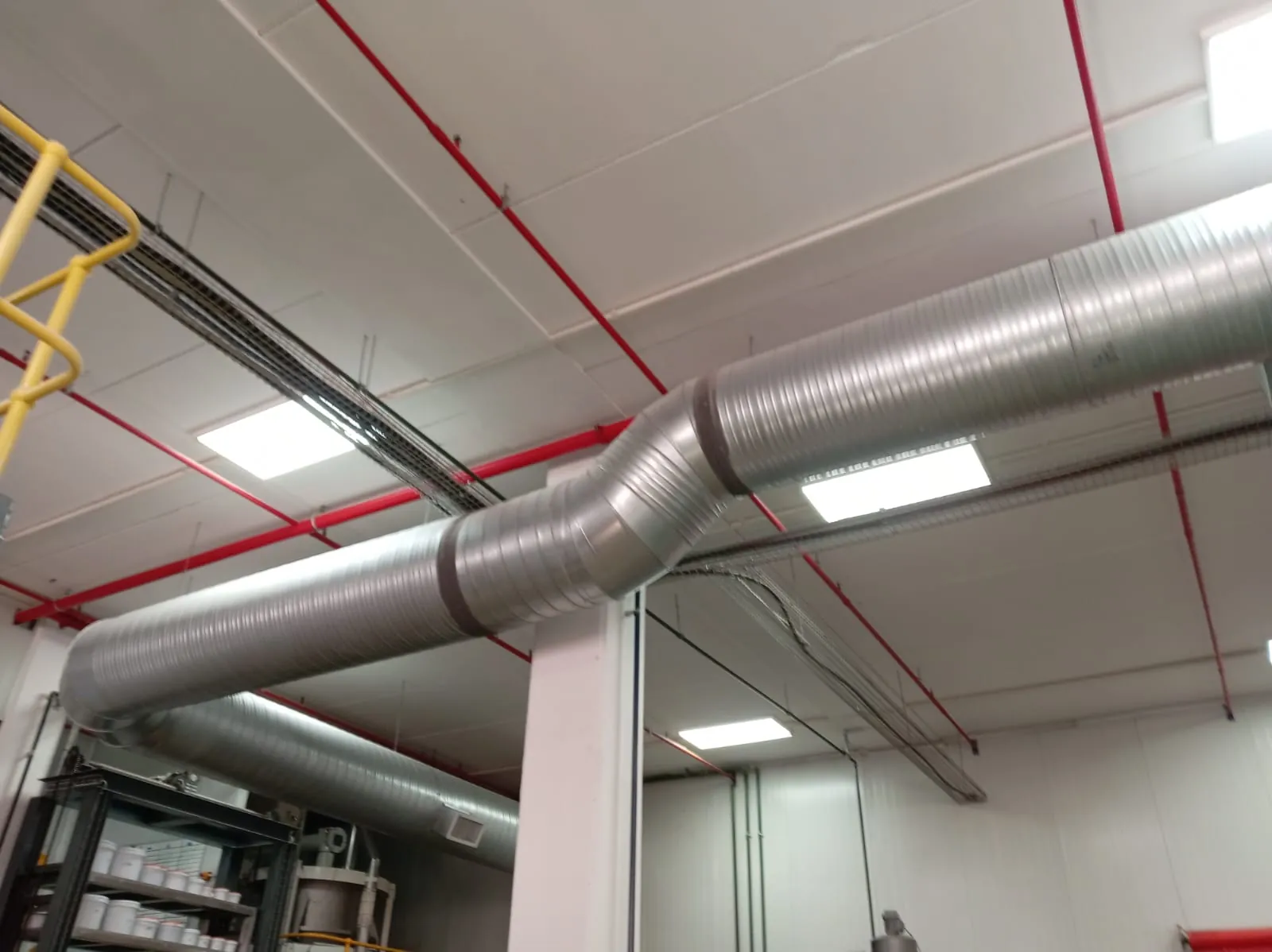
Alberton has a mixed industrial profile: engineering workshops, fabrication, packaging, distribution and general manufacturing often sit close to one another. That means dust-control systems here can range from compact machine extraction to longer duct networks serving several production points.
Bench work, cutting, sanding, grinding and machine dust need capture close to the source rather than relying on general room ventilation.
Where machinery is likely to move or increase, branch sizing and isolation points should allow controlled future changes.
Collectors, filter doors, hoppers and fans should remain reachable without turning routine maintenance into a production shutdown.
Long runs, tight elbows and unnecessary reductions add resistance. We plan routing around the real building and production flow.
Alberton has a mixed industrial profile: engineering workshops, fabrication, packaging, distribution and general manufacturing often sit close to one another. That means dust-control systems here can range from compact machine extraction to longer duct networks serving several production points.
A Alberton site where workshop capture is the main concern needs the capture point checked while the process is operating, not only after shutdown. Bench work, cutting, sanding, grinding and machine dust need capture close to the source rather than relying on general room ventilation. We then compare that requirement with the available route to the collector and the pressure the fan must overcome. For this type of job, small layout choices can determine whether suction remains useful at the machine furthest from the fan.
Consider expansion planning on a working Alberton production floor. Where machinery is likely to move or increase, branch sizing and isolation points should allow controlled future changes. The practical question is how that decision affects operators, cleaning, access and the next machine on the branch. Our assessment therefore follows the air path from the source through the hood and duct, rather than judging the system from the collector nameplate alone.
When service access becomes a problem in Alberton, we look for the restriction or escape point before increasing fan size. Collectors, filter doors, hoppers and fans should remain reachable without turning routine maintenance into a production shutdown. A larger fan cannot correct a badly positioned pickup, a collapsed flexible connection or a branch arrangement that sends most of the airflow to the easiest route. Correcting those details can be more effective than adding power.
For Alberton projects involving duct route discipline, maintainability is part of the design decision. Long runs, tight elbows and unnecessary reductions add resistance. We plan routing around the real building and production flow. The final arrangement should allow the site team to inspect filters, flexible joints, access doors and fan condition without dismantling unrelated equipment. That matters because dust systems usually lose performance gradually, and visible access makes early faults easier to catch.
These examples are design situations, not assumptions about a particular premises. The final collector, filtration method, fan duty and safety controls must be selected from the actual material, process and site conditions.
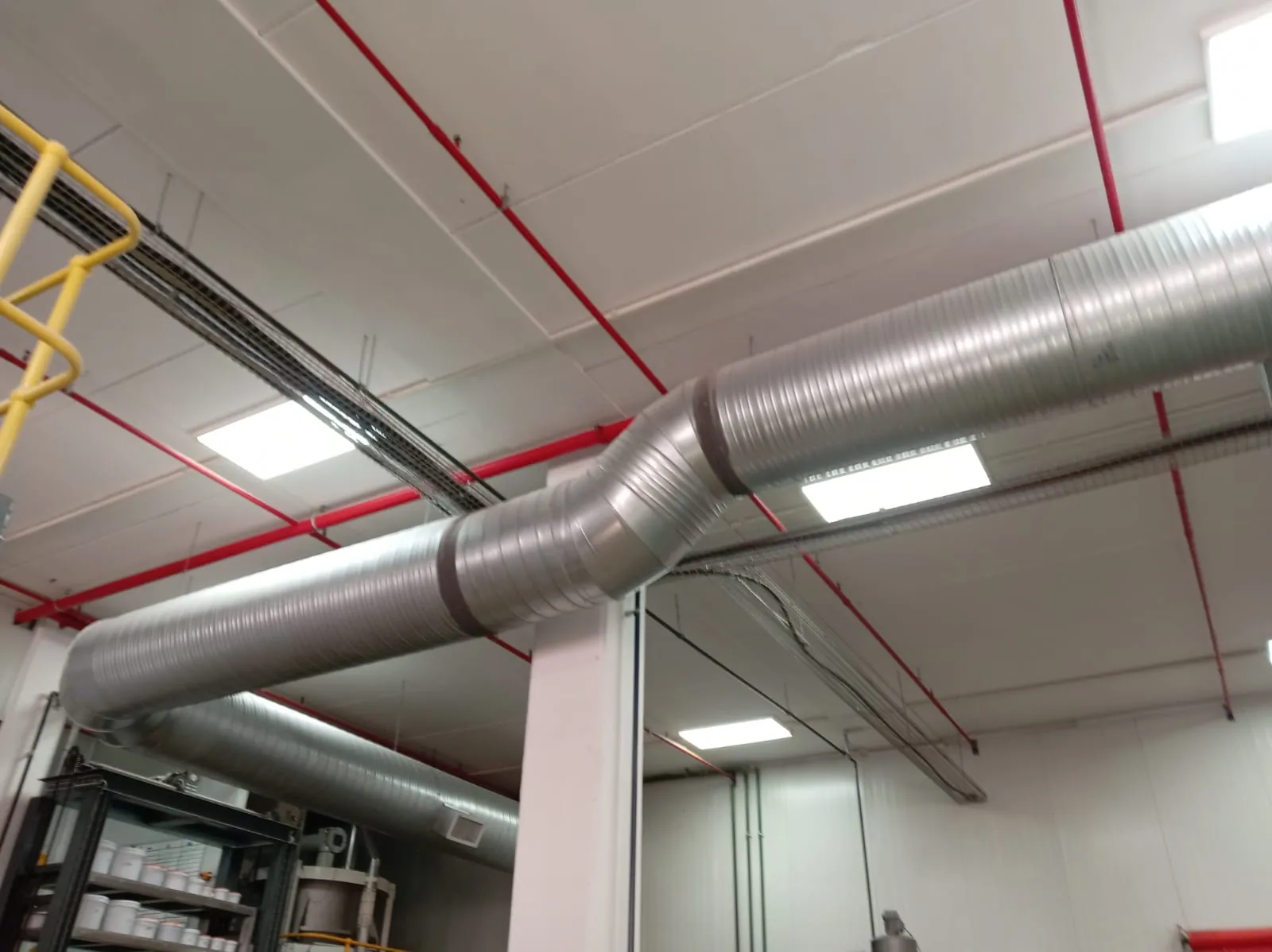
A system that once worked can lose performance as filters load, ducting leaks, flexible connections collapse, machinery changes or extra branches are added. A system that never worked well may have a capture or layout problem rather than a simple motor fault.
We inspect the symptoms in the context of the full system before recommending repairs, duct changes, fan work or collector replacement.
The photos used across this dust-collection cluster are supplied project images from our commercial and industrial extraction work. They show the scale, routing and fabrication quality behind the systems we install and modify.
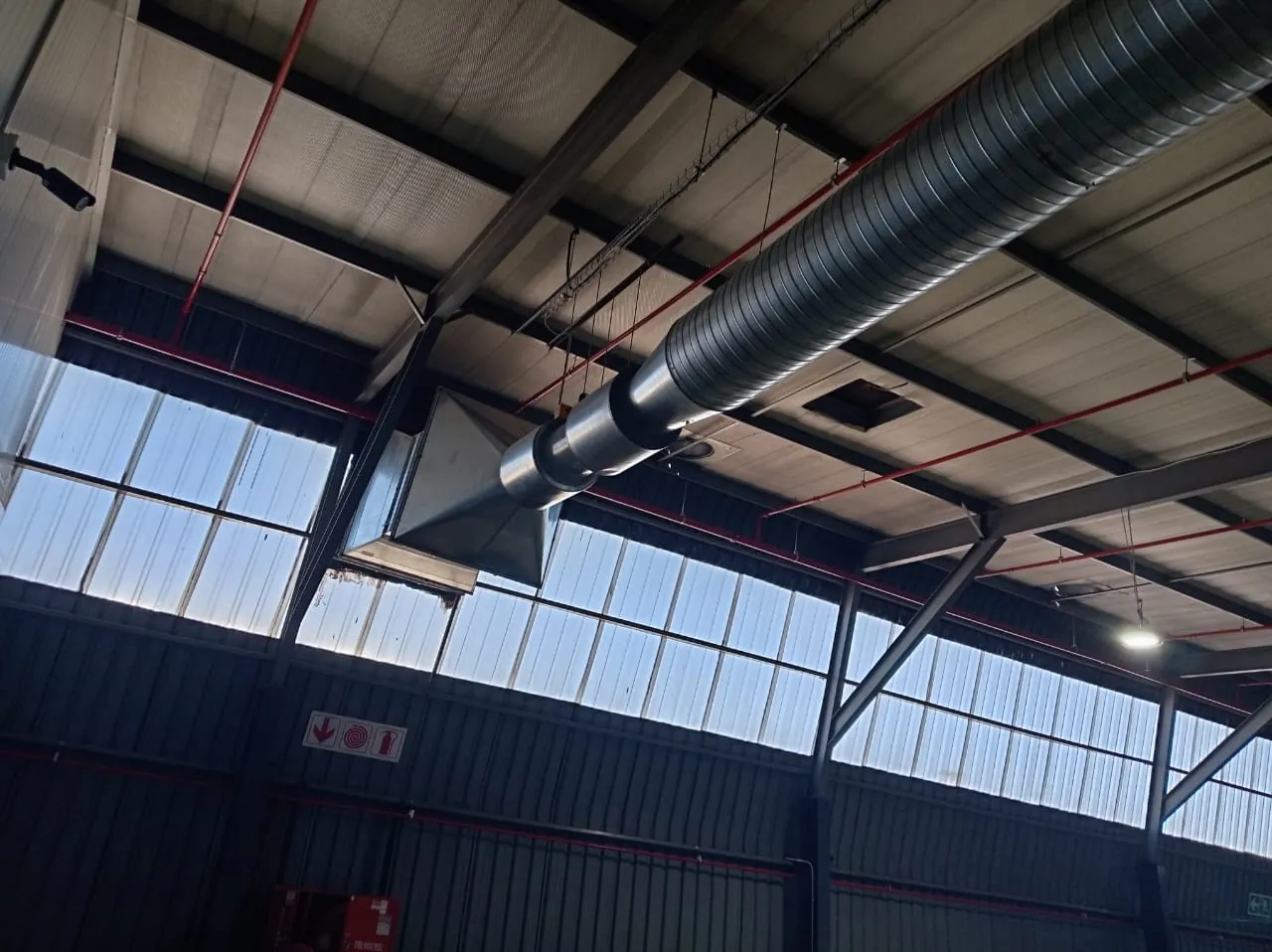
Photos demonstrate our extraction and ducting work. The exact dust collector, filtration and safety configuration for your site must be selected from the process and material involved.