Commercial & industrial extraction across Gauteng+27 69 747 3836info@extractorfanexperts.co.za
Industrial dust control • Jet Park

Industrial Dust Extraction & Collection Systems in Jet Park

Source capture, extraction ducting, dust collectors, fans, repairs and upgrades for manufacturing, warehousing, logistics and workshop spaces in Jet Park and nearby Gauteng industrial areas.

Direct answer

Industrial dust extraction in Jet Park should be designed around the real process and duty.

For Jet Park facilities, we often begin with a routing study. The shortest duct line is not always practical when high-bay doors, racking, fire services and production equipment share the same space.

We balance airflow efficiency with the physical reality of the warehouse so the installation remains serviceable and does not compromise operations.
What we can help withNew extraction systems • collector installation • ducting • source capture • fan integration • system alterations • weak-suction fault finding • maintenance and repairs
Industrial enquiry

Tell us about the dust source

Send the site area, process and what you want captured or improved. Photos can be sent on WhatsApp after submitting.

For hazardous, combustible or process-sensitive dust, suitability must be assessed from the actual material and site conditions before equipment is selected.
Local industrial context

Overhead dust-extraction routing for Jet Park warehouses and workshops

Jet Park combines logistics, warehousing, packaging, aviation-related support and light industrial operations. Many buildings prioritise open floor area, so dust systems need efficient overhead routing and compact equipment placement.

Nearby coverage connects Jet Park with Isando, Kempton Park, Boksburg and Ekurhuleni, but we do not copy one system design from area to area. Building geometry, production sequence, material characteristics and simultaneous machine use determine the final arrangement.

What changes the design on a Jet Park site

We balance airflow efficiency with the physical reality of the warehouse so the installation remains serviceable and does not compromise operations.

Safety note: Combustible, toxic, reactive, hot or otherwise hazardous dust requires material-specific assessment and the appropriate engineering and safety controls. A standard general-purpose collector should not be assumed suitable.
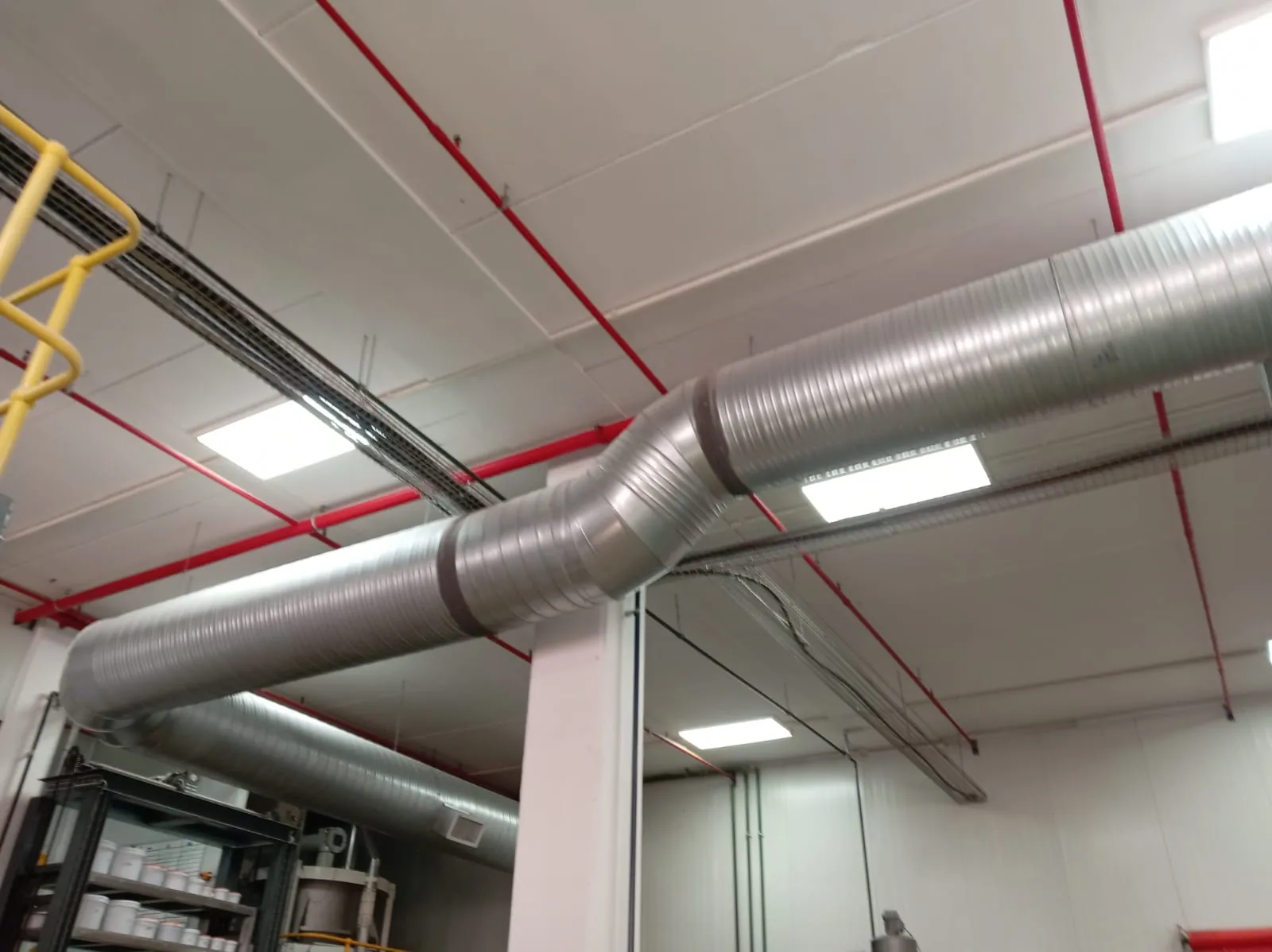
Large spiral ducting transition around a structural obstruction
Real industrial extraction ducting from our project work.
Jet Park system design priorities

Overhead dust-extraction routing for Jet Park warehouses and workshops

Jet Park combines logistics, warehousing, packaging, aviation-related support and light industrial operations. Many buildings prioritise open floor area, so dust systems need efficient overhead routing and compact equipment placement.

Route coordination

We work around roof structure, sprinklers, lighting and cable trays to avoid awkward last-minute deviations.

Open-floor priority

Where floor space is valuable, collectors and mains can be positioned to keep production and storage zones usable.

Branch flexibility

Workstations may change; sensible branch isolation allows controlled alterations later.

Fan and discharge position

Noise, weather exposure and discharge direction are considered before the fan location is fixed.

How we assess the site: We confirm the dust-generating process, material, capture distance, number of active points, existing duct sizes, available collector location, fan/discharge route and maintenance access. We then separate what needs repair from what genuinely needs redesign. We balance airflow efficiency with the physical reality of the warehouse so the installation remains serviceable and does not compromise operations.
Operational examples

How these design priorities affect a working Jet Park site

Jet Park combines logistics, warehousing, packaging, aviation-related support and light industrial operations. Many buildings prioritise open floor area, so dust systems need efficient overhead routing and compact equipment placement.

01

Route coordination in practice

A Jet Park site where route coordination is the main concern needs the capture point checked while the process is operating, not only after shutdown. We work around roof structure, sprinklers, lighting and cable trays to avoid awkward last-minute deviations. We then compare that requirement with the available route to the collector and the pressure the fan must overcome. For this type of job, small layout choices can determine whether suction remains useful at the machine furthest from the fan.

02

Open-floor priority in practice

Consider open-floor priority on a working Jet Park production floor. Where floor space is valuable, collectors and mains can be positioned to keep production and storage zones usable. The practical question is how that decision affects operators, cleaning, access and the next machine on the branch. Our assessment therefore follows the air path from the source through the hood and duct, rather than judging the system from the collector nameplate alone.

03

Branch flexibility in practice

When branch flexibility becomes a problem in Jet Park, we look for the restriction or escape point before increasing fan size. Workstations may change; sensible branch isolation allows controlled alterations later. A larger fan cannot correct a badly positioned pickup, a collapsed flexible connection or a branch arrangement that sends most of the airflow to the easiest route. Correcting those details can be more effective than adding power.

04

Fan and discharge position in practice

For Jet Park projects involving fan and discharge position, maintainability is part of the design decision. Noise, weather exposure and discharge direction are considered before the fan location is fixed. The final arrangement should allow the site team to inspect filters, flexible joints, access doors and fan condition without dismantling unrelated equipment. That matters because dust systems usually lose performance gradually, and visible access makes early faults easier to catch.

These examples are design situations, not assumptions about a particular premises. The final collector, filtration method, fan duty and safety controls must be selected from the actual material, process and site conditions.
Large industrial extraction ducting installed across a production facility
Fabricated duct transitions and suspended extraction runs from our project work.
Common call-outs

When an existing dust extraction system is not performing

A system that once worked can lose performance as filters load, ducting leaks, flexible connections collapse, machinery changes or extra branches are added. A system that never worked well may have a capture or layout problem rather than a simple motor fault.

  • Dust escaping around a machine or workstation
  • Weak suction at the furthest branches
  • Visible dust settling across nearby equipment
  • Filters loading unusually quickly
  • Excessive fan noise, vibration or overheating
  • Collector or hopper access that is difficult to maintain
  • New machinery added to an old duct system
  • Disconnected, leaking or heavily modified duct branches

We inspect the symptoms in the context of the full system before recommending repairs, duct changes, fan work or collector replacement.

Project evidence

Real extraction and ducting work from our team.

The photos used across this dust-collection cluster are supplied project images from our commercial and industrial extraction work. They show the scale, routing and fabrication quality behind the systems we install and modify.
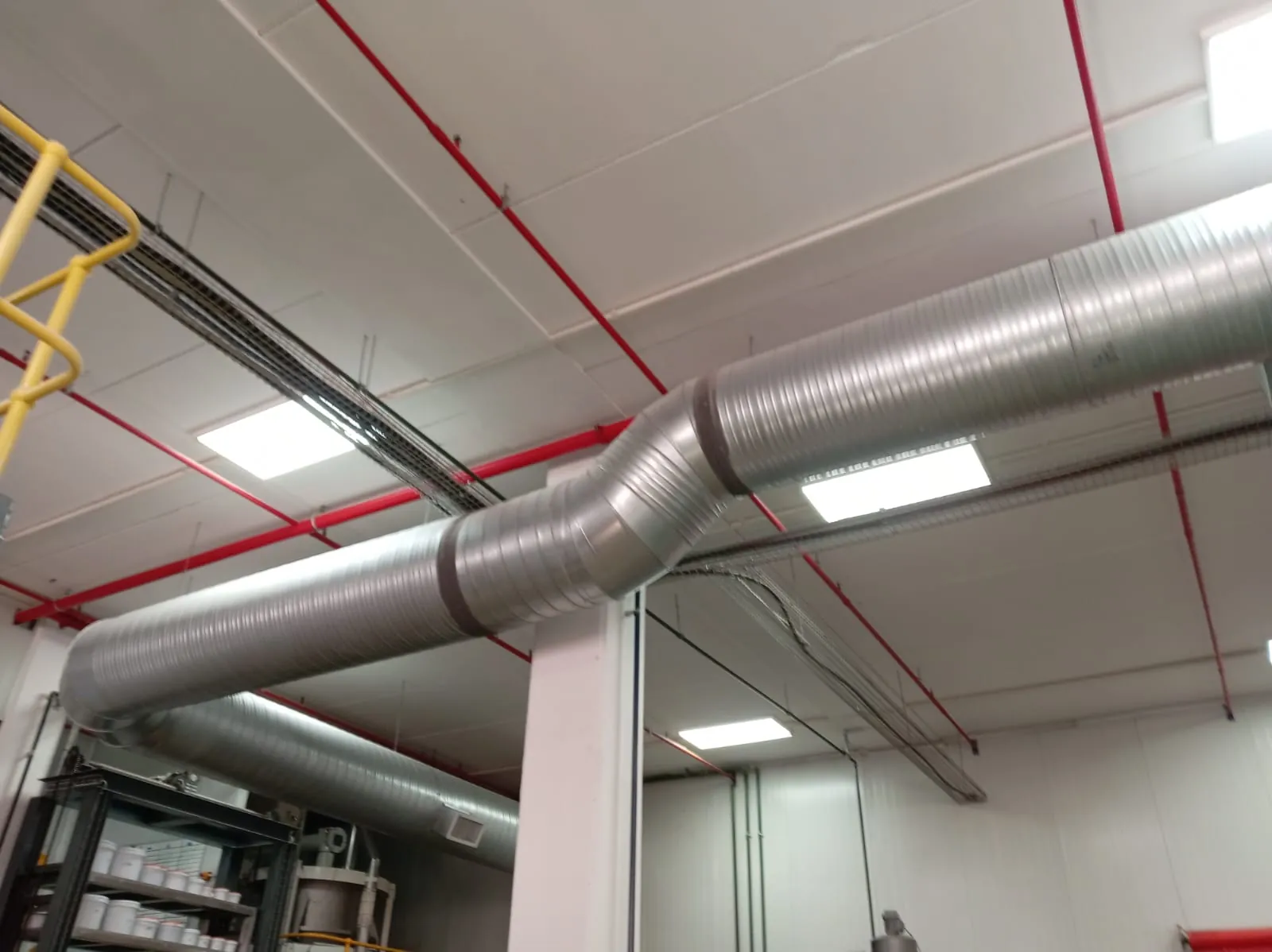
Industrial extraction branch ducting and transition work
Large spiral ducting transition around a structural obstruction
Large industrial extraction ducting installed across a production facility

Photos demonstrate our extraction and ducting work. The exact dust collector, filtration and safety configuration for your site must be selected from the process and material involved.

FAQ

Industrial dust extraction questions in Jet Park

Clear answers to the questions we receive before a site visit or dust-system upgrade.

Do you install industrial dust extraction systems in Jet Park?

Yes. We assess, install, alter and maintain industrial dust extraction and collection systems for factories, workshops and production premises in Jet Park and surrounding Gauteng industrial areas.

What information should I send for a Jet Park dust extraction quote?

Send the site location, process or machine creating the dust, the number of extraction points, whether an existing collector or duct system is present, operating hours and photos of the work area. Material information is important when the dust may be hazardous or combustible.

Can you connect dust extraction to existing machinery?

Often, yes, but the existing machine outlets, branch sizes, duct route, simultaneous use and collector capacity need to be assessed before new branches are added. Adding a branch without checking the whole system can reduce suction elsewhere.

Do you repair weak industrial dust extraction systems?

Yes. Weak suction can come from loaded filters, blocked or leaking ductwork, damaged branches, poor capture, a fan or motor problem, changed machinery or an undersized system. Fault finding should consider the complete air path.

Can every type of industrial dust use the same collector?

No. Dust characteristics matter. Fine, hazardous, combustible, sticky, moist, hot or reactive materials can require different equipment and safety controls. The material and process should be reviewed before equipment is selected.

Request a site assessment

Need industrial dust extraction in Jet Park?

Send the process, site area and photos of the machine, dust source or existing collector. We can then identify what information is still needed before installation, repair or upgrade work is quoted.

Industrial enquiry

Tell us about the dust source

Send the site area, process and what you want captured or improved. Photos can be sent on WhatsApp after submitting.

For hazardous, combustible or process-sensitive dust, suitability must be assessed from the actual material and site conditions before equipment is selected.
WhatsApp
WhatsAppCall Now