
Neat high-level services
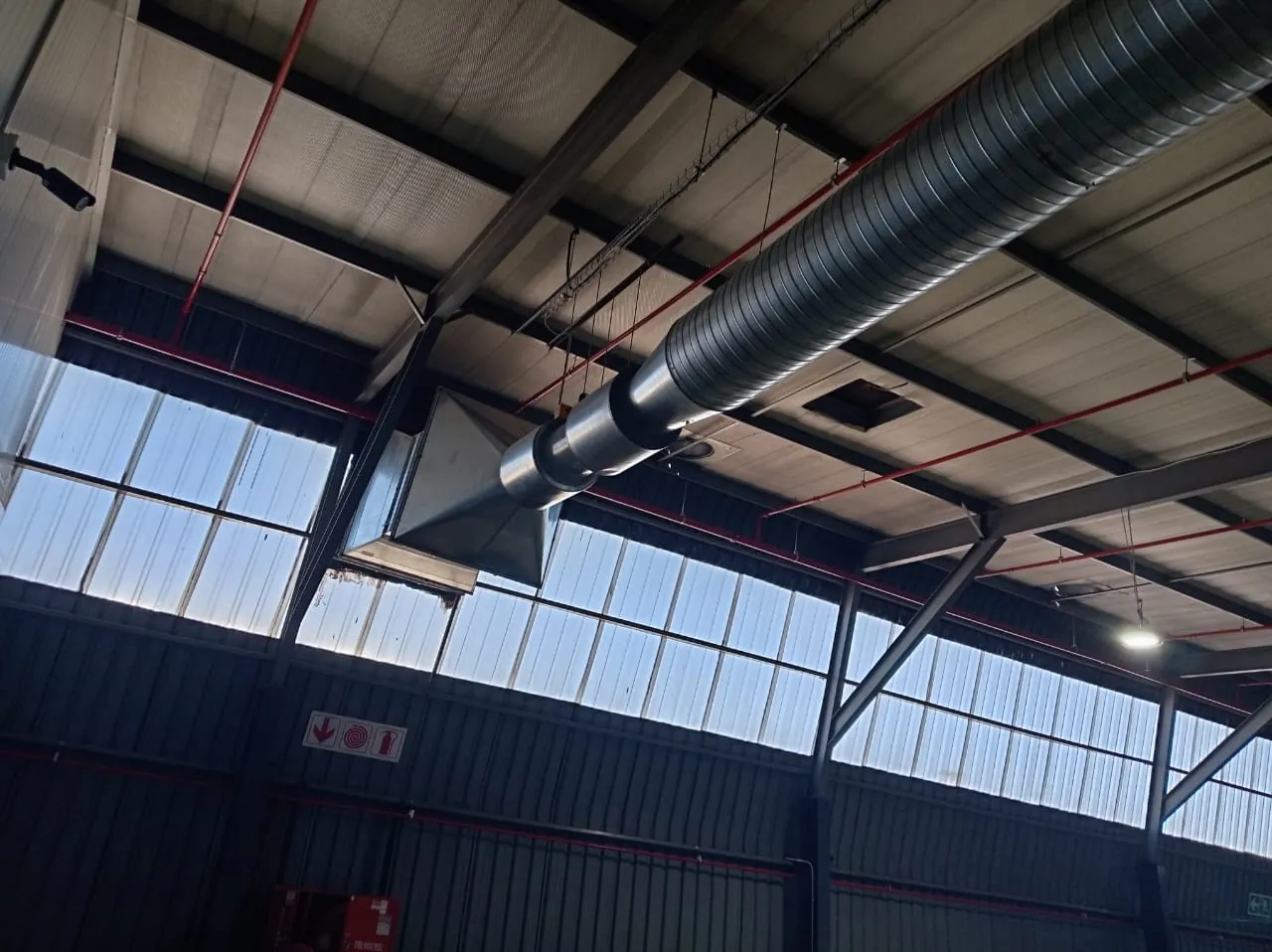
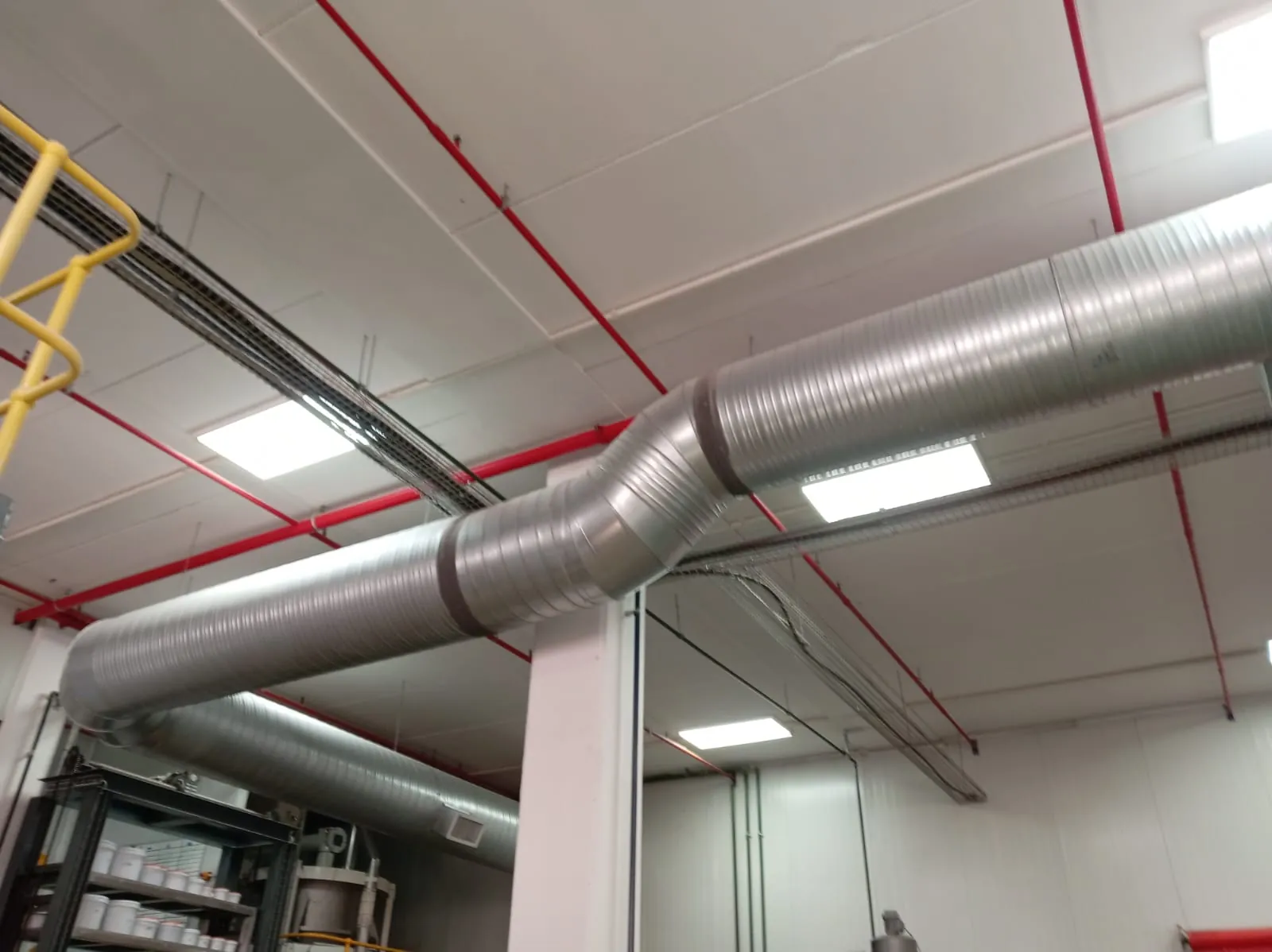
Straight, supported duct routes simplify inspection and reduce visual and physical clutter.
Source capture, extraction ducting, dust collectors, fans, repairs and upgrades for modern warehouses, logistics facilities and light-industrial premises in Linbro Park and nearby Gauteng industrial areas.
In Linbro Park, we focus on neat high-level routing, compact capture arrangements and collector positions that do not undermine warehouse or production layouts. A well-engineered system should feel integrated into the building rather than added as an afterthought.
That means aligning duct runs with structure, keeping service points reachable and avoiding unnecessary drops through active storage or traffic zones.
Linbro Park is characterised by modern distribution, warehousing, light manufacturing, packaging and commercial-industrial premises. Buildings are often clean and space-efficient, so extraction installations need to look organised as well as perform properly.
Nearby coverage connects Linbro Park with Midrand, Johannesburg, Kempton Park and Ekurhuleni, but we do not copy one system design from area to area. Building geometry, production sequence, material characteristics and simultaneous machine use determine the final arrangement.
That means aligning duct runs with structure, keeping service points reachable and avoiding unnecessary drops through active storage or traffic zones.
Linbro Park is characterised by modern distribution, warehousing, light manufacturing, packaging and commercial-industrial premises. Buildings are often clean and space-efficient, so extraction installations need to look organised as well as perform properly.
Straight, supported duct routes simplify inspection and reduce visual and physical clutter.
Local capture at trimming, cutting, powder or packing points prevents dust from spreading into clean warehouse areas.
Equipment placement should preserve racking, picking aisles and loading access.
Where layouts may evolve, branch isolation and accessible connections make later modifications easier.
Linbro Park is characterised by modern distribution, warehousing, light manufacturing, packaging and commercial-industrial premises. Buildings are often clean and space-efficient, so extraction installations need to look organised as well as perform properly.
For Linbro Park projects involving neat high-level services, maintainability is part of the design decision. Straight, supported duct routes simplify inspection and reduce visual and physical clutter. The final arrangement should allow the site team to inspect filters, flexible joints, access doors and fan condition without dismantling unrelated equipment. That matters because dust systems usually lose performance gradually, and visible access makes early faults easier to catch.
On a Linbro Park installation, packaging and light production has to be resolved together with the building layout. Local capture at trimming, cutting, powder or packing points prevents dust from spreading into clean warehouse areas. We check clearances, support positions and how the system will be serviced after handover. The objective is not a visually impressive duct run that is difficult to maintain; it is a stable extraction path that fits the way the facility actually works.
A Linbro Park site where space protection is the main concern needs the capture point checked while the process is operating, not only after shutdown. Equipment placement should preserve racking, picking aisles and loading access. We then compare that requirement with the available route to the collector and the pressure the fan must overcome. For this type of job, small layout choices can determine whether suction remains useful at the machine furthest from the fan.
Consider future tenant changes on a working Linbro Park production floor. Where layouts may evolve, branch isolation and accessible connections make later modifications easier. The practical question is how that decision affects operators, cleaning, access and the next machine on the branch. Our assessment therefore follows the air path from the source through the hood and duct, rather than judging the system from the collector nameplate alone.
These examples are design situations, not assumptions about a particular premises. The final collector, filtration method, fan duty and safety controls must be selected from the actual material, process and site conditions.
A system that once worked can lose performance as filters load, ducting leaks, flexible connections collapse, machinery changes or extra branches are added. A system that never worked well may have a capture or layout problem rather than a simple motor fault.
We inspect the symptoms in the context of the full system before recommending repairs, duct changes, fan work or collector replacement.
The photos used across this dust-collection cluster are supplied project images from our commercial and industrial extraction work. They show the scale, routing and fabrication quality behind the systems we install and modify.
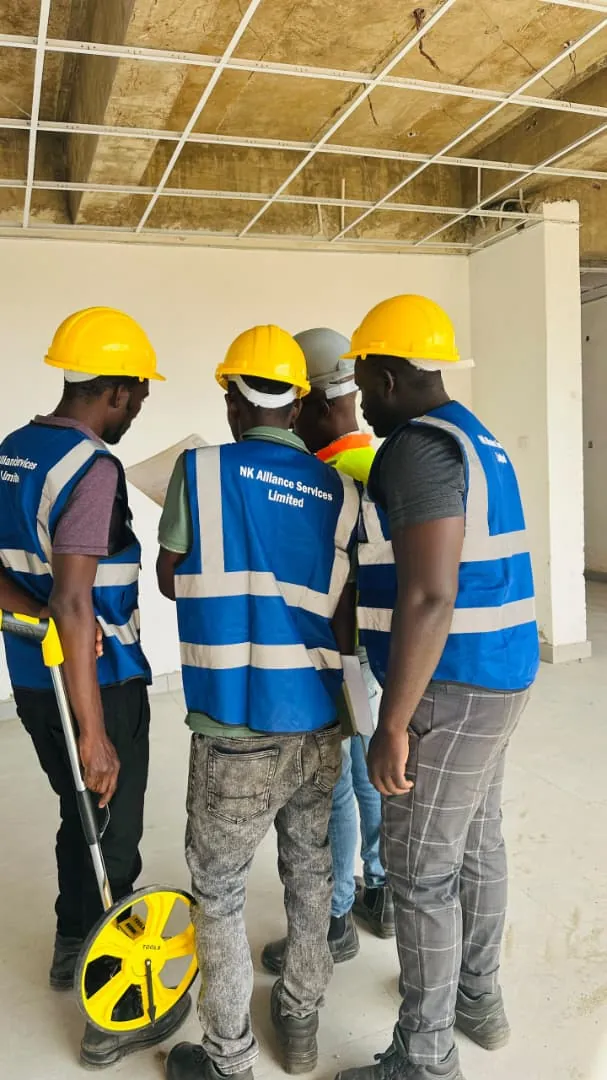
Photos demonstrate our extraction and ducting work. The exact dust collector, filtration and safety configuration for your site must be selected from the process and material involved.